
How To Learn Ethical Hacking: A Step-by-Step Guide
Discover how to learn ethical hacking with step-by-step guidance. Explore tools, techniques, & tips to start your journey into cybersecurity!
Ever wondered what the world of Ethical Hacking is all about? It’s like being the hero of the Digital World. Ethical Hackers are also known as “White Hat Hackers”, who use their skills and expertise to protect the network and system from outside threats. They are always one step ahead of Cybercriminals as they are the protector of our Online World.
Ethical Hacking is not just about breaking into systems. It’s about understanding how they work, finding a place of vulnerability, and helping organizations to fix them before the actual threat strikes. It is an amazing discipline that combines technical knowledge with creative problem-solving abilities.
In this blog, we will get a better insight into how to learn Ethical Hacking from scratch. Keep reading the blog till the end to get a deeper understanding.
What are the Important Skills and Knowledge to Learn Ethical Hacking Online?
To become an Ethical Hacker, you’ll need a mix of technical skills and a good understanding of how the system works. Here’s what one needs to focus on :
Programming Languages – Learn Languages like Python, Java, or C++. They are the fundamentals of many hacking tools.
Basic Networking Knowledge – Understand how a Computer Network Works, which includes protocols, IP Addressing, and Network Architecture.
Web Technologies – Make yourself familiar with HTML, JavaScript, and CSS. In today’s interconnected world, understanding web applications is a must.
Operating Systems – Many hacking tools run on Linux distributions like Kali. So, get comfortable with such Operating systems.
Database Management – Learning SQL and how Database works is crucial for identifying and preventing SQL injection attacks.
Problem Solving – Hacking often resonates with thinking out of the box. Develop your analytical and innovative problem-solving skills.
Continuous Learning – Rapid Evolution of the Tech world requires updating the vulnerabilities and keeping up with the security trends.
Remember, Ethical Hacking is not just about technical skills but also about the mindset. Always prioritize your legal compliance and ethics in your learning journey.
How to Set up Your Learning Environment?
It is essential to create the right environment for learning. Here’s how you can set up yours:
Choose Your Hardware: Though you don’t need a supercomputer, a decent laptop with good processing power and RAM is helpful.
Select your Operating System – Although you can start with Windows, Many ethical hackers prefer Linux. Consider a dual-boot setup for a Linux distribution.
Install Virtual Machines: Virtual Machines allow you to experiment safely without damaging your main system. VirtualBox is a great option that is free to start with.
Set Up a Home Lab: As you move forward, start setting up a small network at home for practicing. This could include old computers, routers, and switches.
Key Software: Installing the basic tools like Wireshark, Metasploit, and Burp Suite for network analysis, penetration testing, and web application security, respectively.
Note: Network Kings is the one-stop solution for all the above-mentioned points. You will know how to learn ethical hacking step by step to build your skills from the entry-level to the advanced level.
What are the Core Ethical Hacking Techniques?
Now, let’s talk about some of the techniques you’ll be learning:
Surveillance – Gathering information about the target, which includes both passive and active methods. By passive, it means using search engines, and by active, it means port scanning methods.
Scanning – You can actively probe the target system to discover open ports, services running, and potential vulnerabilities.
Gaining Access – Exploiting Vulnerabilities to gain entry into target systems, and from here, you get to know about programming skills.
Maintaining Access – Once you are in, you need to make sure you can get back in later. This might involve hiding your tracks or creating backdoors.
Hiding Tracks – In a real-world scenario, you would need to cover or remove evidence of your presence in the system.
Reporting – At last, write your findings and suggest improvements. Clear communication is the key here.
Remember, in Ethical Hacking, you’ll only be doing it with permission and for the purpose of improving security and defending against Cyber attacks.
How To Learn Ethical Hacking to Become a Cybersecurity Engineer?
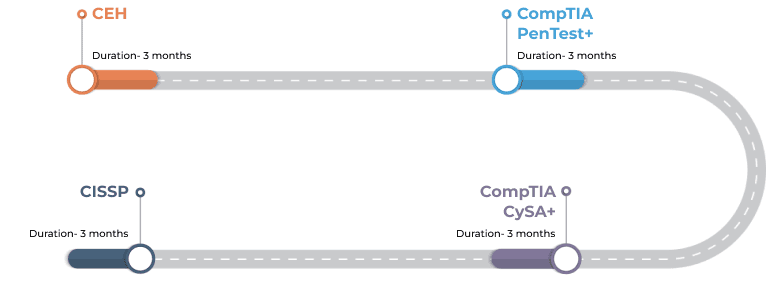
If you are looking to become a skilled Cybersecurity Engineer, let’s have a look at Network Kings Cybersecurity Master Program. In this program, you will not only learn basic ethical hacking but also cover the advanced hacking skills, such as:
CEH(V.13) – Certified Ethical Hacking (Version 12) is crucial to apply your knowledge in practical scenarios. Network King focuses more on hands-on learning and covers the following Modules:
Introduction to Ethical Hacking
Foot Printing and Reconnaissance
Scanning Networks
Enumeration
Vulnerability Analysis
System Hacking
Malware Threats
Sniffing
Social Engineering
Denial-of-Service
Session Hijacking
Evading IDS, firewalls, and Honeypots
Hacking Web Services
SQL Injections
Hacking Wireless Networks
Hacking Mobile Platforms
IoT Hacking
Cloud Computing
Session Hijacking
CompTIA Pentest+ – The CompTIA Penetration Testing Course will enhance your knowledge and skills in planning penetration testing engagements, understanding legal and compliance requirements, and performing vulnerability scanning using appropriate tools and techniques. It covers:
Planning and Scoping
Information Gathering and Vulnerability Scanning
Attacks and Exploits
Reporting and Communication
Tools and Code Analysis
CompTIA CySA+ – CompTIA CyberSecurity Analyst course is essential for the knowledge and skills required to detect, understand, and use the appropriate tools and methods for malicious activity, threat hunting, and to manage and respond to attacks and vulnerabilities, respectively. Here you will learn:
Security Operations
Vulnerability Management
Incident Response and Management
Reporting and Communication
What are the Specialization areas in Ethical Hacking?
As you continue with the techniques, you need to focus on some specific areas –
Network Security – focus needs to be on securing the entire network from Intrusions.
Web Application Security – the focus needs to be on protecting the websites and web apps from attacks.
Mobile Security – the focus needs to be on keeping smartphones and tablets safe.
IoT Security – the focus needs to be on protecting smart devices in our homes and cities.
Cloud Security – the focus needs to be on securing data and applications in the cloud.
Each of these areas has its own set of openings and challenges. It’s like choosing your own Idol to guard the world from Cyber Attacks.
What are the Practical Learning Resources for Ethical Hacking?
Theoretical knowledge is great, but Practice is what makes you perfect. Here are some resources to help you learn:
Online Courses: Platforms like Network Kings offer a Certified Ethical Hacking Course where you can gain hands-on experience in just a few months.
Books: “The Hacker Playbook” Series and “The Web Application Hacker’s Handbook” are great reads.
Capture The Flag (CTF) challenges: Websites like TryHackMe and HackTheBox offer hands-on challenges.
Bug Bounty Programs: Once you are confident, try your hand at finding actual vulnerabilities on platforms like HackerOne or Bugcrowd.

Remember the best way to learn is by doing, Don’t be afraid to make mistakes in your controlled environment.
How to Build A Career in Ethical Hacking?
So you have learned the ropes, and you’re ready to make a career out of it? Here’s How:
Get Certified: CEH (Certified Ethical Hacker) and OSCP (Offensive Security Certified Professional) are well-recognized certifications.
Build a portfolio: Document your projects, CTF wins, and any vulnerabilities you’ve responsibly disclosed.
Network: Join local cybersecurity meetups and online forums for better networking.
Look for entry-level positions: Roles like Junior Penetration Tester or Security Analyst are great starting points for beginners.
Ethical Hacking is all about continuous learning. This field is evolving, so you should keep yourself updated!
Wrapping Up
Learning Ethical Hacking is an exciting journey that combines technical skills with creativity and problem-solving. It’s not just about breaking into systems, but about understanding how they work and how to make them more secure. With the right hacking skills, mindset, and ethical hacking tools, you can become a digital guardian, protecting organizations and individuals from cyber attacks.
Ethical Hacking is now way easier with Network Kings. The Path to learn Ethical Hacking and become an Ethical Hacker may be challenging, but the rewards are well worth the effort. We will be happy to support you every step of the way.
Happy Learning!
Frequently Asked Questions!
1. Is ethical hacking legal?
Yes, as long as you have explicit permission from the system owner.
2. What is the duration required to become proficient as an ethical hacker?
It varies, but with dedicated study, you can start in about 6 months to a year.
3. Do I need a degree in computer science to become an ethical hacker?
While helpful, it's not necessary. Many successful ethical hackers are self-taught.
4. Is ethical hacking dangerous?
When done correctly in a controlled environment, it's safe. Always ensure you have permission.
5. Can I make a good living as an ethical hacker?
Yes, skilled ethical hackers are in high demand and can have good salaries.