How to Become a Successful DevOps Engineer in 2026
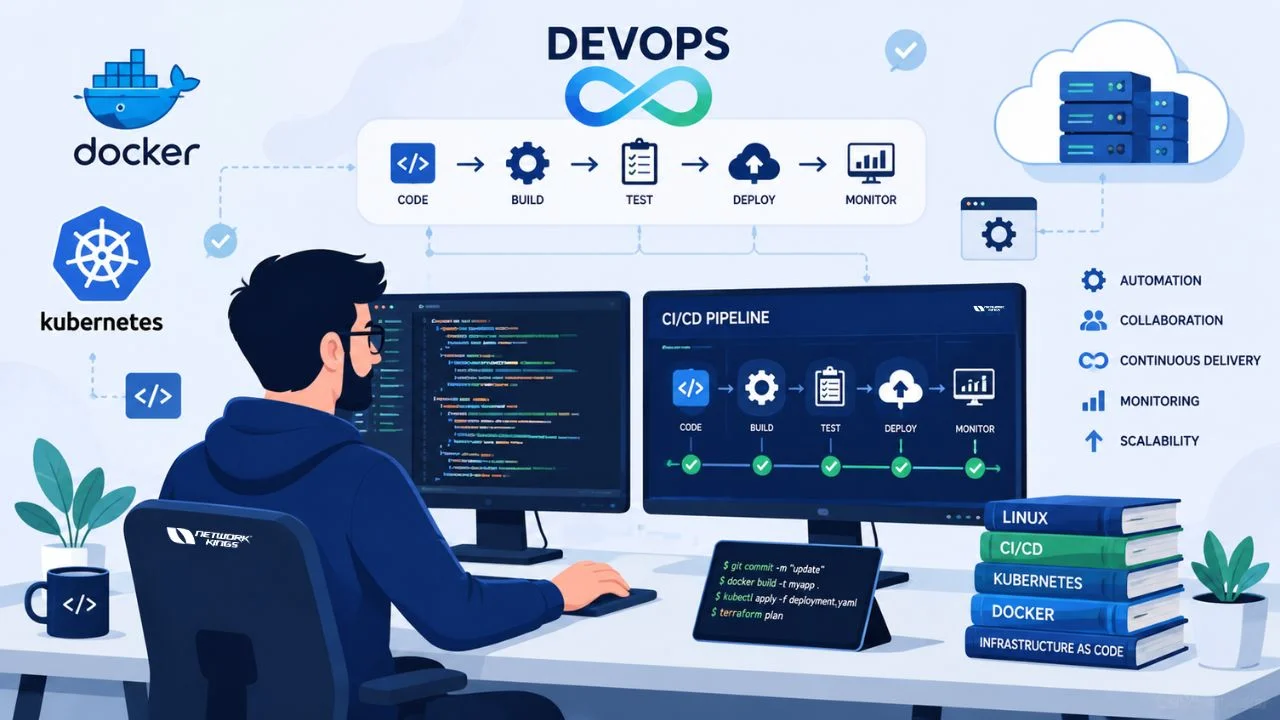
The demand for a skilled DevOps Engineer continues to grow as organizations accelerate digital transformation, cloud adoption, and software automation. Businesses today rely on faster deployments, reliable infrastructure, and secure development practices, making DevOps one of the most valuable careers in IT. Whether you're a student, software developer, system administrator, or cloud enthusiast, becoming a DevOps professional can open doors to high-paying opportunities across industries.
In 2026, employers are looking beyond technical knowledge. They want professionals who can automate workflows, improve collaboration between development and operations teams, and manage scalable cloud environments. This guide walks you through the essential skills, tools, certifications, and career roadmap needed to become a successful DevOps Engineer.
What Is a DevOps Engineer
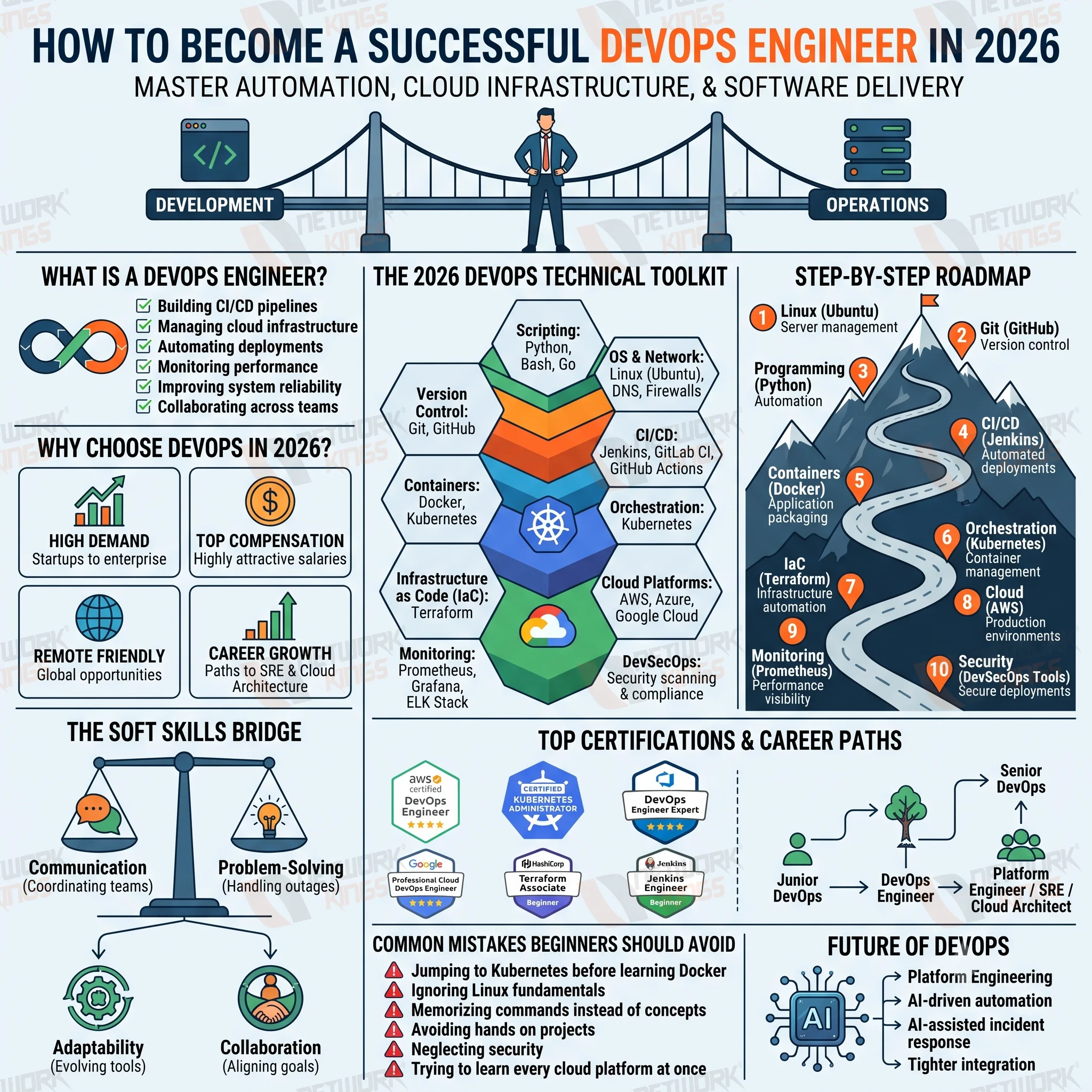
A DevOps Engineer bridges the gap between software development and IT operations. Their primary responsibility is to automate software delivery, improve deployment speed, enhance system reliability, and ensure continuous integration and continuous delivery (CI/CD).
Instead of managing isolated tasks, DevOps professionals build automated workflows that enable faster and more secure software releases.
Typical responsibilities include:
Building CI/CD pipelines
Managing cloud infrastructure
Automating deployments
Monitoring application performance
Improving system reliability
Collaborating with developers and security teams
Why DevOps Is One of the Best IT Careers in 2026
Digital transformation has pushed nearly every company toward cloud native architecture, and that shift has created massive demand for professionals who understand automation and infrastructure management. Organizations no longer see DevOps as optional. It is now core to how software gets built and delivered.
A few reasons DevOps remains a strong career choice this year include:
High demand across startups, enterprises, and government organizations
Attractive salaries compared to many traditional IT roles
Strong overlap with cloud computing, AI tooling, and platform engineering
Clear career growth into Site Reliability Engineering, cloud architecture, or DevSecOps leadership
Remote and hybrid opportunities across global companies
Essential Technical Skills Every DevOps Engineer Needs
Becoming a capable DevOps engineer requires a mix of foundational IT knowledge and hands-on tool expertise. Employers generally expect a working understanding of the following areas.
Best Programming Languages for DevOps
You do not need to be a software architect, but scripting ability is non-negotiable. Python is widely used for automation and tooling, while Bash scripting is essential for Linux-based tasks. Go has also gained popularity because many DevOps tools, including Docker and Kubernetes, are written in it.
Linux and Networking Fundamentals
Most production servers and containers run on Linux, so comfort with the command line, file permissions, process management, and shell scripting is essential. Alongside this, understanding networking basics such as DNS, load balancing, firewalls, and TCP/IP helps you troubleshoot real-world infrastructure issues quickly.
Git and Version Control
Every DevOps workflow starts with version control. You should be comfortable with branching strategies, pull requests, merge conflicts, and Git hooks, since infrastructure as code and pipeline configurations also live in Git repositories.
CI/CD Pipeline Fundamentals
Continuous integration and continuous delivery form the backbone of DevOps. Tools like Jenkins, GitHub Actions, and GitLab CI automate testing and deployment, reducing manual errors and speeding up release cycles significantly.
Docker and Kubernetes
Containerization with Docker allows applications to run consistently across environments, while Kubernetes handles orchestration at scale. Learning how to write Dockerfiles, manage pods, and configure Kubernetes deployments is considered a must-have skill in 2026.
Infrastructure as Code
Tools like Terraform let you define cloud infrastructure using code instead of manual configuration. This approach improves consistency, version control, and disaster recovery, making infrastructure as code a core competency for modern DevOps engineers.
Cloud Platforms
Employers expect familiarity with at least one major cloud provider. AWS DevOps, Azure DevOps, and Google Cloud DevOps each offer their own certification tracks and tooling ecosystems, so pick one platform to specialize in before branching out.
Monitoring and Logging Tools
Once applications are live, monitoring tools such as Prometheus, Grafana, and the ELK stack help teams catch issues before users do. Strong observability practices separate average engineers from great ones.
DevSecOps Fundamentals
Security can no longer be bolted on at the end. DevSecOps integrates security scanning, vulnerability management, and compliance checks directly into the CI/CD pipeline, making it a valuable specialization within DevOps.
Soft Skills That Make Great DevOps Engineers
Technical skills get you the interview, but soft skills often determine long-term success. Strong communication helps you coordinate between development, QA, and operations teams. Problem-solving under pressure matters during outages. Adaptability is critical since tools and best practices evolve constantly, and collaboration keeps cross-functional teams aligned.
Step-by-Step DevOps Engineer Roadmap
A practical roadmap helps beginners stay focused.
Skill | Why It Matters | Recommended Tool |
Linux | Server management | Ubuntu |
Git | Version control | GitHub |
Programming | Automation | Python |
CI/CD | Automated deployments | Jenkins |
Containers | Application packaging | Docker |
Orchestration | Container management | Kubernetes |
Infrastructure as Code | Infrastructure automation | Terraform |
Cloud | Production environments | AWS |
Monitoring | Performance visibility | Prometheus |
Security | Secure deployments | DevSecOps Tools |
Following this progression builds a strong foundation for real-world projects.
Recommended DevOps Certifications
Certification | Best For | Difficulty |
AWS Certified DevOps Engineer | Cloud-focused DevOps roles | Intermediate to Advanced |
Certified Kubernetes Administrator | Container orchestration specialists | Intermediate |
Microsoft Certified Azure DevOps Engineer Expert | Azure-centric organizations | Intermediate to Advanced |
Google Professional Cloud DevOps Engineer | Google Cloud environments | Intermediate |
HashiCorp Certified Terraform Associate | Infrastructure as code roles | Beginner to Intermediate |
Certified Jenkins Engineer | CI/CD pipeline specialists | Beginner |
Common Mistakes Beginners Should Avoid
Jumping straight into Kubernetes without understanding Docker basics
Ignoring Linux fundamentals in favor of only learning tools
Memorizing commands instead of understanding underlying concepts
Avoiding hands-on projects and relying solely on tutorials
Neglecting security practices until late in the learning journey
Trying to learn every cloud platform at once instead of specializing first
DevOps Salary and Career Opportunities in 2026
The DevOps Salary remains among the highest in the technology sector due to increasing demand.
Career opportunities include:
Junior DevOps Engineer
DevOps Engineer
Senior DevOps Engineer
Platform Engineer
Site Reliability Engineer
Cloud Engineer
DevSecOps Engineer
Infrastructure Automation Engineer
Experienced professionals often transition into cloud architecture or engineering leadership positions.
Future of DevOps
Looking ahead, DevOps is increasingly merging with platform engineering and AI-driven automation. Expect more emphasis on self-service infrastructure platforms, AI-assisted incident response, and tighter integration between security and delivery pipelines. Engineers who stay adaptable and keep learning new tools will remain highly employable.
Final Thoughts
Becoming a successful DevOps engineer in 2026 is not about memorizing every tool on the market. It is about building a strong foundation in Linux, scripting, CI/CD, containers, and cloud platforms, then specializing based on where the industry and your interests intersect. Follow the roadmap, build real projects, earn a relevant certification, and stay curious. The demand for skilled DevOps engineers is not slowing down anytime soon.
FAQS
Is DevOps a good career in 2026?
Yes. DevOps remains one of the most in-demand IT careers due to widespread cloud adoption, automation needs, and the ongoing shortage of skilled engineers capable of managing modern infrastructure.
Can a fresher become a DevOps Engineer?
Yes, though most freshers benefit from starting in roles such as system administration, QA automation, or junior cloud support before fully moving into DevOps, since practical infrastructure experience matters a lot to employers.
Which programming language is best for DevOps?
Python and Bash are the most commonly used languages for scripting and automation, while Go is valuable for understanding and contributing to popular DevOps tools.
Does DevOps require coding?
DevOps requires scripting more than traditional software development. You need enough coding ability to automate tasks, write pipeline configurations, and troubleshoot issues, but you do not need to be a full-stack developer.
How long does it take to learn DevOps?
With consistent effort, most learners can build job-ready DevOps skills in six to twelve months, though becoming truly proficient with advanced tools like Kubernetes can take longer.
What is the difference between DevOps and Site Reliability Engineering?
DevOps focuses broadly on collaboration and automation across the software delivery lifecycle, while Site Reliability Engineering applies software engineering principles specifically to maintain system reliability and uptime.
Which cloud platform should I learn first for DevOps?
AWS is the most widely adopted platform and a strong starting point, though Azure and Google Cloud are excellent choices depending on your target industry or region.
What is the average salary of a DevOps Engineer?
Salaries vary significantly by region and experience level, but DevOps engineers generally earn above-average IT salaries, with strong growth potential as skills in cloud and Kubernetes deepen.

The founder of Network Kings, is a renowned Network Engineer with over 12 years of experience at top IT companies like TCS, Aricent, Apple, and Juniper Networks. Starting his journey through a YouTube channel in 2013, he has inspired thousands of students worldwide to build successful careers in networking and IT. His passion for teaching and simplifying complex technologies makes him one of the most admired mentors in the industry.