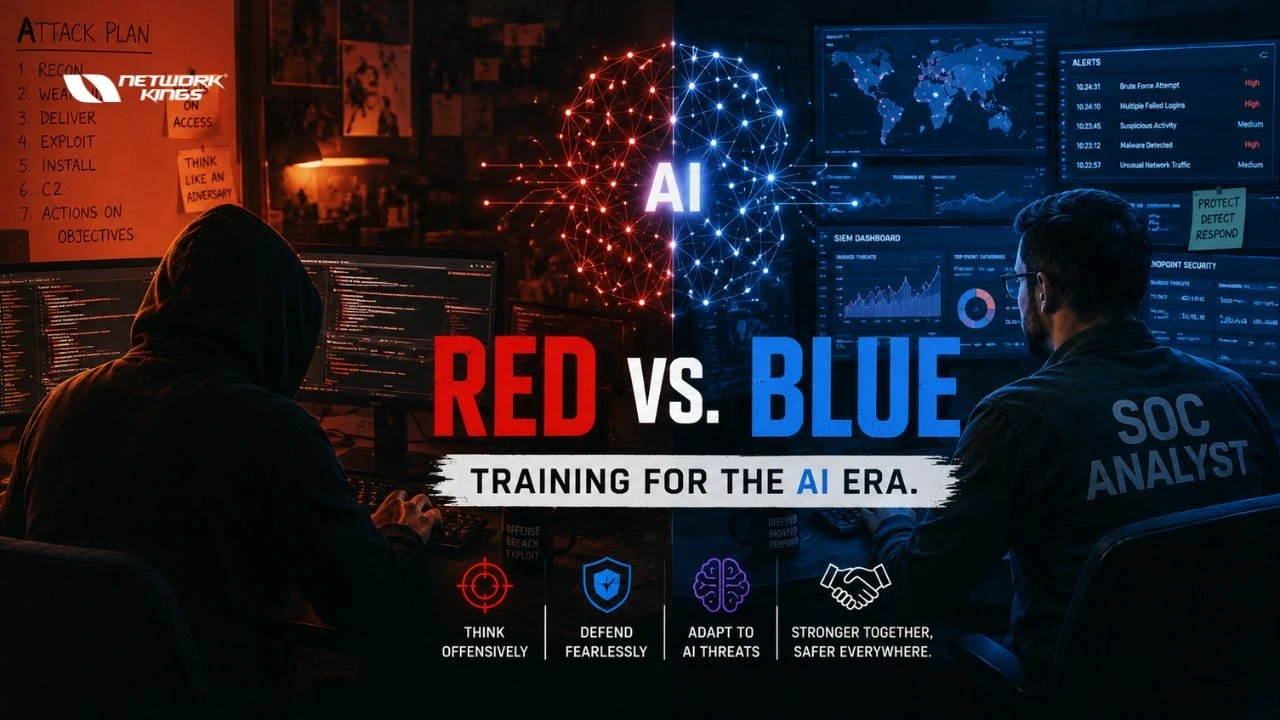
Why Red Team and Blue Team Training Is Critical in the Age of AI Threats
Artificial Intelligence is transforming cybersecurity at an unprecedented pace. While AI enables organizations to automate threat detection, improve security monitoring, and strengthen defenses, cybercriminals are leveraging the same technology to launch more sophisticated attacks. From AI-generated phishing emails and deepfake scams to automated malware and intelligent reconnaissance tools, modern cyber threats are becoming faster, smarter, and harder to detect.
In this evolving threat landscape, organizations can no longer rely solely on traditional security measures. They need skilled professionals who can think like attackers and defenders alike. This is where Red Team and Blue Team Training becomes essential. By developing both offensive and defensive cybersecurity capabilities, businesses can better identify vulnerabilities, strengthen security controls, and respond effectively to emerging threats.
What Are Red Teams and Blue Teams?
Red Team
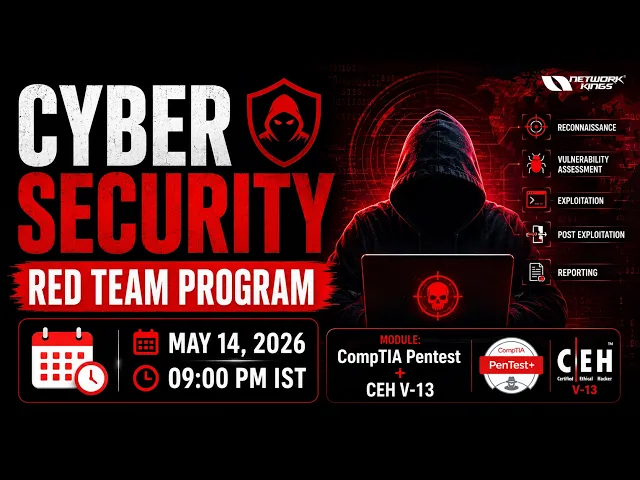
A Red Team simulates real-world cyberattacks to identify weaknesses before malicious actors can exploit them. These professionals specialize in:
Penetration testing
Adversary simulation
Vulnerability assessment
Social engineering exercises
Red Team members think like attackers. Their goal is to challenge an organization's security posture by uncovering vulnerabilities, misconfigurations, and security gaps.
Blue Team
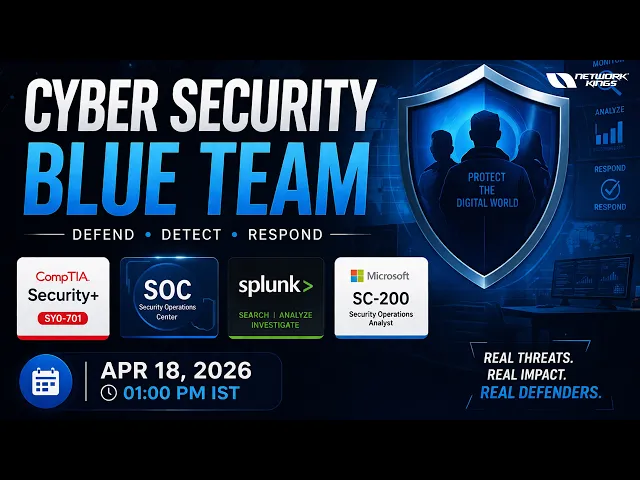
The Blue Team focuses on defending systems, networks, and applications against cyber threats. Their responsibilities include:
Security monitoring
Threat detection
Incident response
Threat hunting
Security operations
Blue Team professionals continuously monitor security events and work to detect, contain, and mitigate attacks before they cause significant damage.
Why AI Threats Are Changing Cybersecurity
AI is changing both sides of the cybersecurity battlefield. Attackers now use machine learning algorithms and generative AI tools to automate and enhance cyberattacks.
AI-Generated Phishing Campaigns
Traditional phishing emails often contained grammatical mistakes and obvious warning signs. Today, AI can generate highly convincing phishing messages that mimic executive communication styles, making them much harder to detect.
Deepfake Social Engineering
Cybercriminals can create realistic audio and video deepfakes to impersonate executives, employees, or vendors. These attacks can manipulate individuals into transferring funds or disclosing sensitive information.
AI-Assisted Malware
Modern malware can adapt its behavior, evade detection mechanisms, and automate attack processes using AI-driven techniques.
Automated Reconnaissance
Attackers use AI to scan vast networks, identify vulnerabilities, and prioritize targets faster than ever before.
These developments have significantly expanded the attack surface, making advanced cybersecurity training more important than ever.
Why Red Team Training Is Essential in 2026
As cyber threats become increasingly sophisticated, organizations need security professionals capable of simulating advanced attack scenarios.
Adversary Emulation
Red Team training teaches professionals how real-world attackers operate, enabling them to replicate attack techniques used by cybercriminal groups.
Penetration Testing
Through hands-on penetration testing, Red Team professionals identify vulnerabilities in applications, networks, and cloud environments before attackers can exploit them.
Security Validation
Organizations often invest heavily in security technologies but fail to test whether those controls actually work. Red Team exercises validate the effectiveness of existing defenses.
Real-World Scenario
Imagine a company deploying a new cloud application. A Red Team assessment might reveal exposed APIs, weak authentication controls, or privilege escalation vulnerabilities before the application goes live.
Why Blue Team Training Is Critical for Modern Organizations
While Red Teams identify weaknesses, Blue Teams ensure that organizations can detect and respond to attacks in real time.
Threat Detection
Blue Team training develops the ability to identify suspicious activity across endpoints, networks, and cloud environments.
Security Monitoring
Professionals learn to use Security Information and Event Management (SIEM) platforms to correlate events and uncover threats.
Threat Hunting
Rather than waiting for alerts, Blue Team analysts proactively search for indicators of compromise within enterprise environments.
Incident Response
When a breach occurs, trained Blue Team professionals can quickly contain threats, investigate incidents, and restore operations.
SOC Operations
Security Operations Centers (SOCs) rely heavily on skilled analysts who can manage alerts, prioritize threats, and coordinate responses effectively.
Red Team vs Blue Team: Why Organizations Need Both
Area | Red Team | Blue Team |
Objective | Find and exploit vulnerabilities before attackers do | Detect, contain, and respond to threats |
Mindset | Attacker- creative, persistent, adversarial | Defender- systematic, analytical, process-driven |
Core Skills | Exploitation, social engineering, evasion, lateral movement | Log analysis, threat hunting, incident response, forensics |
Key Tools | Metasploit, Cobalt Strike, Burp Suite, BloodHound, Nmap | Splunk, Microsoft Sentinel, CrowdStrike, Wireshark, Velociraptor |
Responsibilities | Pen testing, adversary emulation, security assessments | SOC operations, threat detection, incident response, SIEM management |
Output | Findings reports, attack paths, security gaps | Alerts, incident reports, threat intelligence, playbooks |
The Importance of Purple Teams
The most mature organizations adopt a Purple Team approach, where Red and Blue Teams collaborate. This partnership helps improve security controls, refine detection capabilities, and strengthen overall cyber defense strategies.
Key Skills Developed Through Red Team and Blue Team Training
Red Team Skills
Ethical hacking and penetration testing methodology
Network and web application vulnerability assessment
Active Directory attack techniques (Kerberoasting, Pass-the-Hash, DCSync)
Social engineering- phishing campaigns, pretexting, vishing
Custom payload development and AV/EDR evasion
Post-exploitation - lateral movement, persistence, data exfiltration
Blue Team Skills
Log analysis across Windows Event Logs, Sysmon, firewall, proxy, and DNS
SIEM platform management- rule creation, dashboard building, alert tuning
Threat hunting using hypothesis-driven methodology
Digital forensics - memory analysis, disk imaging, artifact recovery
Incident response - containment, eradication, recovery, and post-incident review
Threat intelligence consumption and operationalization
Career Opportunities After Red Team and Blue Team Training
The cybersecurity job market in 2026 remains one of the tightest in technology. The global skills gap continues to widen, with millions of unfilled positions globally. Training in either Red or Blue Team disciplines opens doors to:
Penetration Tester / Ethical Hacker - contracted or in-house offensive security testing
Red Team Operator - advanced adversary simulation, often requires significant experience
SOC Analyst (Tier 1–3) - alert triage, investigation, and escalation
Threat Hunter - proactive threat identification in enterprise environments
Incident Responder / DFIR Analyst - handling active incidents and forensic investigation
Security Engineer - building and maintaining security infrastructure
Cybersecurity Consultant - advisory services for enterprise security programs
CISO / Security Leadership - long-term career destination for experienced practitioners
Penetration testers and Red Team operators command salaries ranging from $90,000 to $180,000+ depending on specialization and experience. Senior threat hunters and incident responders are similarly well compensated. Beyond salary, these roles offer genuine intellectual challenge- no two engagements or incidents are identical.
Best Certifications for Red Team and Blue Team Professionals
Certifications matter in cybersecurity hiring. They signal baseline competency and provide a structured learning path.
Red Team Certifications
CEH (Certified Ethical Hacker) - vendor-neutral, broad foundation, good for entry-level and corporate recognition
OSCP (Offensive Security Certified Professional) - the gold standard for hands-on pen testing; demanding, respected, and practically oriented
eJPT (eLearnSecurity Junior Penetration Tester) - excellent starting point for beginners, affordable and practical
PNPT (Practical Network Penetration Tester) - TCM Security's credential, strong community reputation, and real-world relevance
Blue Team Certifications
CompTIA Security+ - foundational, widely recognized by employers, good entry-level credential
CySA+ (Cybersecurity Analyst) - focuses on threat detection and behavioral analytics, excellent Blue Team credential
GCIA (GIAC Certified Intrusion Analyst) - deep dive into network forensics and intrusion detection
GCIH (GIAC Certified Incident Handler) - incident response focused, well-regarded in enterprise and government environments
Certifications complement experience - they don't replace it. Pair every certification with hands-on lab work.
Common Mistakes Beginners Make
Chasing tools before understanding fundamentals. Knowing how to run Nmap isn't the same as understanding TCP/IP. Tools change; fundamentals don't.
Skipping Linux. Both Red and Blue Team work is heavily Linux-dependent. Bash scripting, file system navigation, and process management are baseline skills.
Ignoring networking. Subnetting, routing, DNS, HTTP - these aren't optional background knowledge. They're the substrate everything else sits on.
No home lab. Reading about Active Directory attacks and actually running them in a virtualized home lab are completely different experiences. Set up the lab.
Treating certifications as the destination. A cert is evidence of learning, not a replacement for it. The exam is the checkpoint; the knowledge is the goal.
Skipping defensive knowledge on the Red Team path (and vice versa). The best Red Teamers deeply understand how defenders think. The best Blue Teamers understand how attackers operate. The overlap is where real expertise lives.
How to Become Job-Ready in Cybersecurity
Build a home lab- use free tools (VirtualBox, VMware Workstation Player) to run vulnerable VMs, practice Active Directory attacks, and simulate SOC scenarios.
Learn Linux seriously- not just the command line basics. Scripting, permissions, process management, log locations. Try Ubuntu or Kali as a daily driver.
Study networking deeply- CompTIA Network+ or Professor Messer's free materials cover what you need. Supplement with Wireshark packet analysis practice.
Use Hack The Box, TryHackMe, and PicoCTF- structured, gamified environments that build real skills. Start with guided paths before tackling open challenges.
Participate in CTF competitions- CyberDefenders, SANS Holiday Hack, and local BSides CTFs provide exposure to real attack/defense scenarios under time pressure.
Earn one certification- pick one aligned with your target role and pursue it seriously. Don't collect certifications; develop skills.
Document everything- write up labs, CTF solutions, and home lab projects on a blog or GitHub. It's portfolio work, and it demonstrates you can communicate technical findings clearly.
The Future of Red Team and Blue Team Operations
AI is cutting both ways. The same technology making attacks more sophisticated is also making defenders more capable.
AI-powered threat detection- platforms like Darktrace and Vectra use unsupervised ML to establish behavioral baselines and flag anomalies that signature-based tools miss. Blue Teams are learning to tune and interpret these systems, not just monitor traditional SIEM alerts.
Extended Detection and Response (XDR) is consolidating endpoint, network, identity, and cloud telemetry into unified platforms, giving SOC analysts greater visibility with less alert noise.
Autonomous security operations are emerging- AI agents that can triage alerts, run initial investigation queries, and escalate with context- but human judgment remains essential for high-stakes decisions. The SOC analyst of 2026 increasingly manages AI tools rather than raw alert queues.
Human-AI collaboration is the model that matters. AI handles scale; humans handle nuance. Red Teamers who understand AI-specific attack surfaces and Blue Teamers who can work effectively alongside AI detection systems will be the most valuable security professionals in the market.
The rise of AI-powered cyber threats has fundamentally changed the cybersecurity landscape. Organizations need professionals who can proactively identify vulnerabilities, simulate real-world attacks, detect sophisticated threats, and respond effectively to security incidents.
Red Team and Blue Team Training equips cybersecurity professionals with the practical skills needed to defend modern enterprises against evolving threats. Whether your goal is to become an ethical hacker, SOC analyst, penetration tester, or security engineer, investing in professional cybersecurity courses and hands-on training can significantly accelerate your career growth and prepare you for the challenges of the AI-driven cybersecurity era.
FAQs
What is the difference between Red Team and Blue Team?
Red Teams simulate attacks to identify vulnerabilities, while Blue Teams defend systems by detecting and responding to threats.
Which cybersecurity career is better: Red Team or Blue Team?
Both paths offer excellent opportunities. The best choice depends on whether you prefer offensive security testing or defensive security operations.
Is Red Team training difficult?
Red Team training can be challenging because it requires strong knowledge of networking, operating systems, and security, but it is achievable with consistent practice.
Can beginners start with Blue Team training?
Yes. Many beginners enter cybersecurity through SOC analyst and Blue Team roles before expanding into offensive security.
Which certifications are best for cybersecurity careers?
Popular certifications include CEH, OSCP, Security+, CySA+, GCIH, and GCIA.
How does AI impact cybersecurity jobs?
AI automates many security tasks, but it also creates new threats. Skilled cybersecurity professionals remain in high demand.
Are Red Team and Blue Team skills in demand?
Yes. Organizations worldwide are actively seeking professionals with offensive and defensive security expertise.

The founder of Network Kings, is a renowned Network Engineer with over 12 years of experience at top IT companies like TCS, Aricent, Apple, and Juniper Networks. Starting his journey through a YouTube channel in 2013, he has inspired thousands of students worldwide to build successful careers in networking and IT. His passion for teaching and simplifying complex technologies makes him one of the most admired mentors in the industry.