What Is SD-WAN? Key Benefits for Cloud, Security, and Network Performance
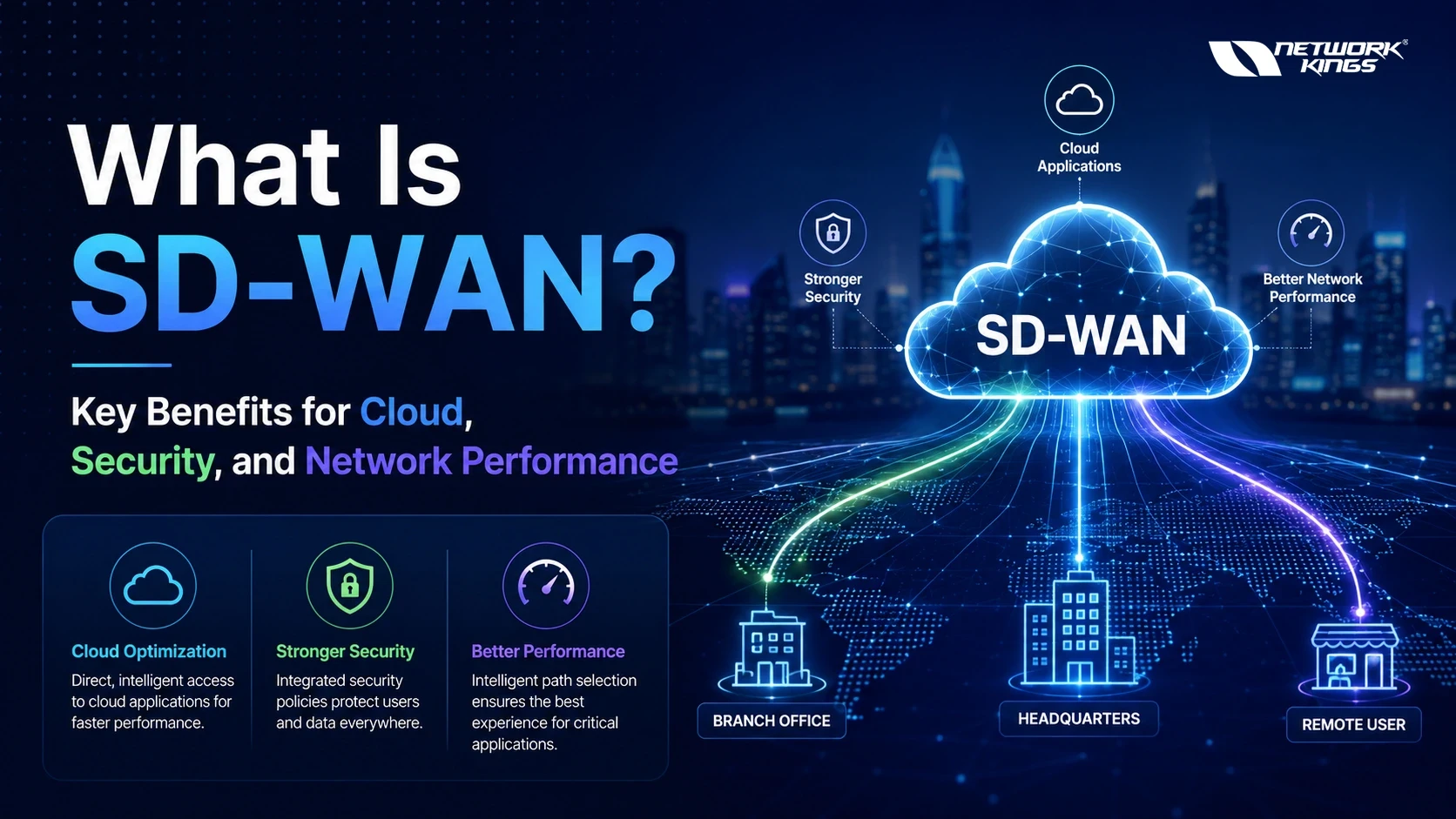
Organizations today run applications across data centers, public clouds, and dozens of SaaS platforms at once. Traditional networks were never built for this kind of sprawl, which is why so many IT teams struggle with slow application performance, rigid infrastructure, and rising connectivity costs. SD-WAN solves these problems by giving businesses a smarter, software-driven way to manage traffic across their entire network. As cloud adoption accelerates, SD-WAN has become a foundational technology for companies that need fast, secure, and flexible connectivity between branch offices, data centers, and cloud platforms.
What Is SD-WAN
SD-WAN, or software-defined wide area network, is a technology that simplifies how organizations connect and manage their networks across multiple locations. Instead of relying on dedicated hardware and rigid routing rules, SD-WAN uses software to control traffic intelligently across various connection types, including broadband, LTE, and MPLS.
This software-driven approach allows businesses to direct traffic based on real-time performance, not fixed paths. For companies with multiple branch offices, remote employees, and cloud-based applications, this flexibility translates into better performance and easier network management.
How SD-WAN Works
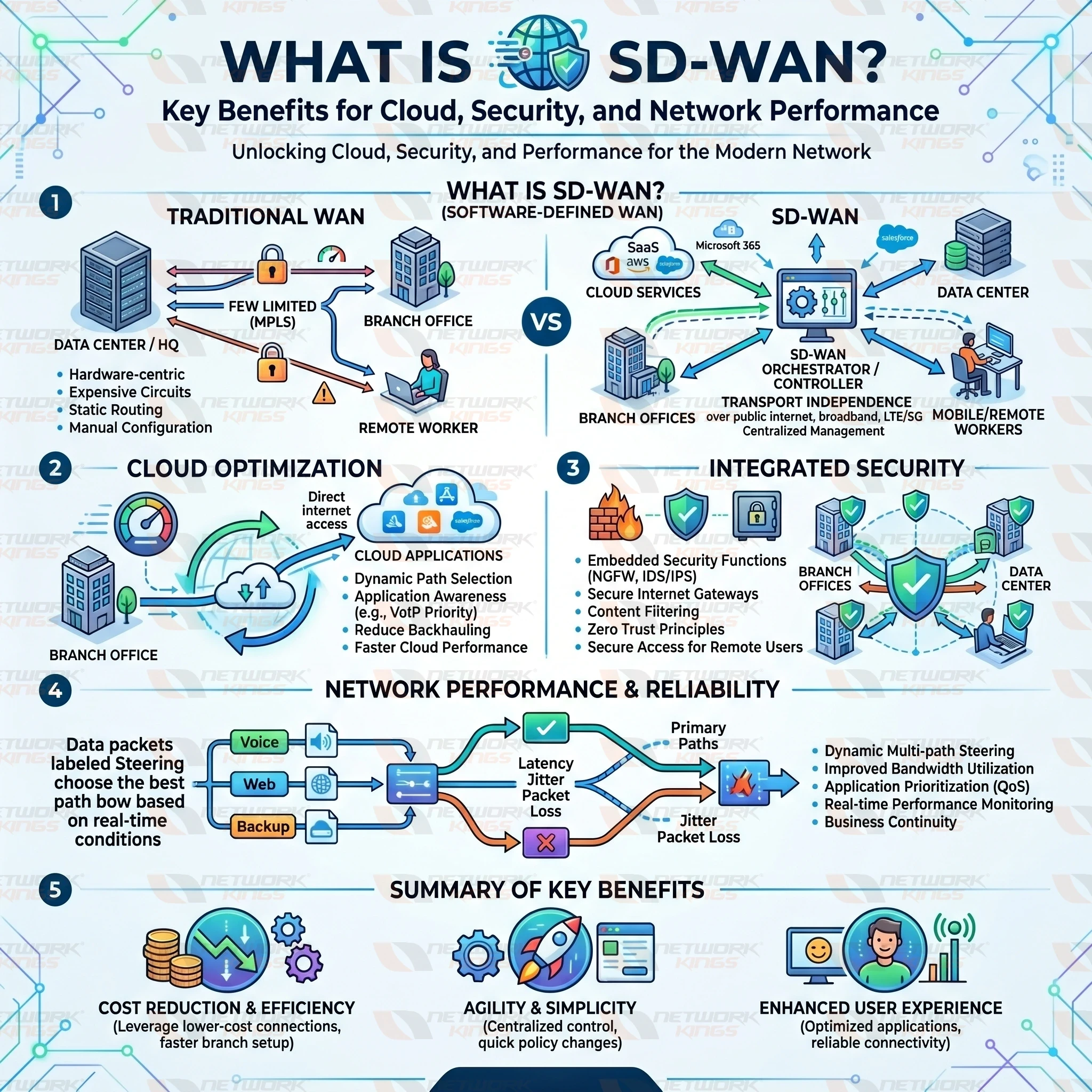
SD-WAN operates differently from traditional WAN setups because it separates network control from the underlying hardware. This separation gives IT teams more visibility and control over how traffic moves across the network.
Centralized Management
SD-WAN uses a centralized controller to manage policies, configurations, and routing decisions across the entire network. Instead of manually configuring each branch router, administrators can push updates and policies from a single dashboard. This reduces operational overhead and minimizes configuration errors, especially for organizations with many branch locations.
Traffic Routing and Path Selection
One of SD-WAN's core capabilities is dynamic path selection. The system continuously monitors network conditions such as latency, jitter, and packet loss, then automatically chooses the best path for each type of traffic. If one connection becomes congested or unreliable, SD-WAN can reroute traffic to a more stable path without manual intervention.
Application-Aware Networking
SD-WAN identifies specific applications and prioritizes traffic based on business needs. For example, a video conferencing tool can be given priority over routine file backups. This application-aware routing ensures that critical SaaS applications and real-time tools perform consistently, even during periods of high network demand.
Traditional WAN vs SD-WAN
Many organizations still rely on traditional WAN architectures built around MPLS circuits. While MPLS offers reliability, it often comes with high costs and limited flexibility. SD-WAN addresses many of these limitations directly.
Factor | Traditional WAN | SD-WAN |
Cost | High, due to MPLS circuit pricing | Lower, uses broadband and hybrid connections |
Performance | Fixed routing, less adaptable | Dynamic, application-aware routing |
Scalability | Slow and hardware-dependent | Fast, software-based deployment |
Security | Often requires a separate security stack | Built-in encryption, integrates with SASE |
Cloud Connectivity | Limited, not optimized for cloud traffic | Optimized for direct cloud and SaaS access |
Management Complexity | High, manual configuration per site | Centralized, simplified management |
Key Benefits of SD-WAN
Improved Cloud Performance
SD-WAN enables direct, optimized connections to cloud platforms instead of routing traffic through a central data center. This is especially valuable for businesses using hybrid cloud or multi-cloud environments, where application performance depends heavily on efficient routing. By reducing unnecessary detours, SD-WAN helps cloud applications load faster and run more reliably.
Enhanced Network Security
Security is one of the strongest reasons organizations adopt SD-WAN. Most solutions include built-in encryption, segmentation, and integration with broader security frameworks like Secure Access Service Edge (SASE). This allows businesses to apply Zero Trust principles more effectively, verifying every user and device before granting access rather than assuming trust based on network location.
Better Application Performance
Because SD-WAN continuously monitors network conditions, it can prioritize business-critical applications in real time. This is particularly useful for organizations relying on cloud-based collaboration tools, VoIP, or video conferencing, where even small delays can disrupt productivity.
Reduced WAN Costs
By allowing businesses to use a mix of broadband, LTE, and MPLS rather than relying solely on expensive dedicated circuits, SD-WAN often lowers overall connectivity costs. Many organizations reduce their MPLS dependency significantly after deployment, redirecting that budget toward other IT priorities.
Centralized Management and Visibility
SD-WAN gives IT teams a single view into network performance across all locations. This visibility makes it easier to identify bottlenecks, troubleshoot issues, and enforce consistent policies across branch offices, without needing to manage each site individually.
Business Agility and Scalability
Opening a new branch location or scaling up cloud usage no longer requires lengthy hardware deployments. SD-WAN supports faster rollouts, allowing businesses to expand network capacity in days rather than weeks, which is critical for companies growing quickly or adapting to shifting business needs.
Common SD-WAN Use Cases
Organizations across industries use SD-WAN to solve specific connectivity and performance challenges, including:
Connecting multiple branch offices with consistent performance and centralized policy control
Supporting hybrid and multi-cloud strategies by optimizing direct cloud access
Improving performance for SaaS applications such as Microsoft 365 or Salesforce
Enabling secure remote access for distributed and hybrid workforces
Replacing or supplementing costly MPLS circuits with more flexible connectivity options
Challenges and Considerations Before Deployment
While SD-WAN offers significant advantages, it is not without considerations. Organizations should evaluate vendor compatibility, integration with existing security tools, and the learning curve associated with new management platforms. Network teams should also plan for proper bandwidth allocation and ensure their SD-WAN solution aligns with broader security strategies, including SASE and Zero Trust frameworks. A clear migration plan, rather than a rushed rollout, typically leads to smoother adoption and fewer performance issues.
Is SD-WAN Right for Your Organization
SD-WAN tends to deliver the most value for organizations with multiple branch locations, heavy cloud or SaaS usage, or a growing remote workforce. Businesses still relying heavily on legacy MPLS connections or facing rising WAN costs are also strong candidates. However, smaller organizations with simple, single-site networks may not see the same level of benefit. Evaluating current pain points, such as inconsistent application performance or high connectivity costs, can help determine whether SD-WAN aligns with business goals.
Final Thoughts
SD-WAN has become a key part of modern network architecture because it directly addresses the demands of cloud-first business environments. By improving performance, strengthening security, and simplifying network management, SD-WAN gives organizations the flexibility they need to support growth, remote work, and increasingly complex application ecosystems. For businesses evaluating their long-term network strategy, understanding how SD-WAN works is an essential first step toward building a more resilient and efficient infrastructure.
FAQs
What is SD-WAN in simple terms?
SD-WAN is a software-based approach to managing wide area networks that intelligently routes traffic across multiple connection types for better performance and flexibility.
Is SD-WAN more secure than traditional WAN?
SD-WAN typically offers stronger security through built-in encryption and integration with frameworks like SASE and Zero Trust, though security still depends on proper configuration.
Can SD-WAN replace MPLS completely?
SD-WAN can reduce or replace MPLS dependency for many organizations, though some businesses choose a hybrid approach combining both for critical applications.
Does SD-WAN improve cloud application performance?
Yes, SD-WAN optimizes routing to cloud platforms, reducing latency and improving performance for SaaS and multi-cloud applications.
Is SD-WAN suitable for small businesses?
SD-WAN benefits organizations with multiple locations or heavy cloud usage most. Small, single-site businesses may see limited advantages.

The founder of Network Kings, is a renowned Network Engineer with over 12 years of experience at top IT companies like TCS, Aricent, Apple, and Juniper Networks. Starting his journey through a YouTube channel in 2013, he has inspired thousands of students worldwide to build successful careers in networking and IT. His passion for teaching and simplifying complex technologies makes him one of the most admired mentors in the industry.