Understanding Infrastructure as Code (IaC): Core Benefits and Essential Tools
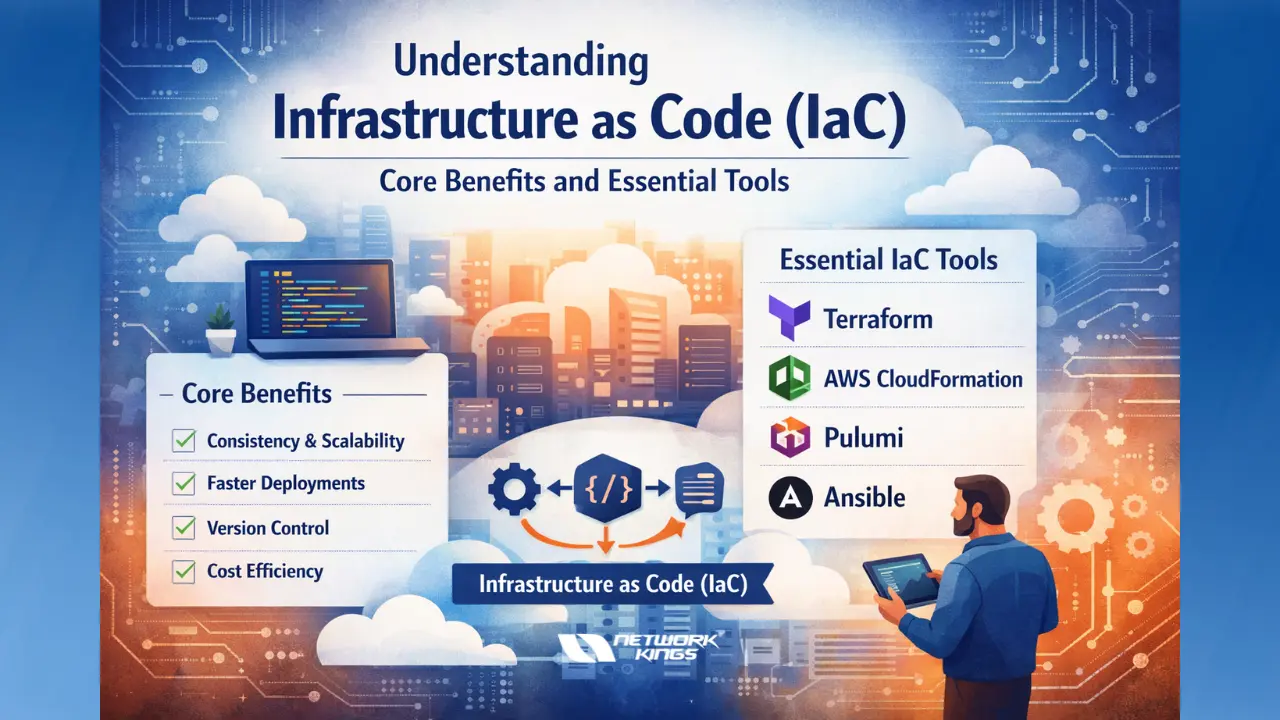
If you've spent any time managing cloud environments or working alongside DevOps teams, you've almost certainly heard the term Infrastructure as Code — or IaC, as it's commonly called. At first glance, it might sound like another piece of technical jargon designed to confuse non-developers. But once you understand what it actually means and why it matters, it's hard to imagine going back to the way things were done before.
In this article, we'll break down what Infrastructure as Code really is, why organizations of all sizes are adopting it rapidly, and which tools are leading the charge in 2025.
What Is Infrastructure as Code, Really?
At its core, Infrastructure as Code is exactly what it sounds like: the practice of managing and provisioning your IT infrastructure — servers, networks, databases, load balancers, you name it — through machine-readable configuration files rather than manual processes or interactive configuration tools.
Think about the old way of doing things. A system administrator would manually log into a server, run a series of commands, click through a GUI, and hope they remembered every step the next time they had to set something up. It worked — until it didn't. One missed step, one misconfigured firewall rule, and you've got a problem that might take hours to trace back to its source.
IaC replaces that fragile, human-dependent process with code that is version-controlled, repeatable, and shareable. Your infrastructure becomes a blueprint that anyone on the team can read, review, and reproduce.
Why IaC Has Become Non-Negotiable for Modern Teams
The shift toward IaC isn't just a trend — it's a response to the real pressures teams face when scaling infrastructure in fast-moving environments. Here's why so many engineering and operations teams have made it a cornerstone of their workflow:
1. Consistency You Can Actually Count On
When infrastructure is defined in code, every environment — development, staging, production — is built from the same blueprint. That eliminates the classic "it works on my machine" nightmare. Consistency across environments reduces bugs that are nearly impossible to reproduce, and it makes deployments far more predictable.
2. Speed and Scalability Without the Headache
Manually spinning up ten servers takes time, focus, and room for human error. With IaC, you can provision hundreds of resources in minutes by running a single script. For teams scaling quickly or handling variable workloads, this kind of speed is genuinely transformative. What once took a day now takes a coffee break.
3. Version Control for Your Infrastructure
One of the most underrated benefits of IaC is treating infrastructure the same way developers treat application code — with Git. Every change is tracked, every team member can see the history, and if something breaks, you can roll back to a known-good state. This level of auditability is invaluable, particularly in regulated industries where you need to document exactly what changed and when.
4. Cost Efficiency That Adds Up Fast
Misconfigured or forgotten resources are one of the biggest sources of unnecessary cloud spending. IaC makes it easy to identify, audit, and destroy resources that are no longer needed. When your infrastructure is code, it's also easier to do cost planning before you deploy — not after the bill arrives.
5. Collaboration Across Teams
Infrastructure code lives in repositories where developers, security engineers, and ops professionals can all contribute, review, and comment. This breaks down the silos that have historically made "DevSecOps" more of an aspiration than a reality.
The Essential IaC Tools You Should Know
There's no shortage of tools in this space, but a handful have emerged as go-to choices depending on your use case, cloud environment, and team preferences.
Terraform (by HashiCorp)
Terraform is arguably the most widely adopted IaC tool in the industry today. It uses a declarative language called HCL (HashiCorp Configuration Language) and supports virtually every major cloud provider — AWS, Azure, Google Cloud, and beyond. Its provider ecosystem is enormous, and its state management system gives teams precise control over infrastructure changes. If you're starting fresh and want something battle-tested, Terraform is a safe and powerful choice.
AWS CloudFormation
For teams that live entirely within the AWS ecosystem, CloudFormation is a native, tightly integrated option. It allows you to define AWS resources using JSON or YAML templates and handles dependency management and rollback natively. The trade-off is that it's AWS-specific — you won't be using CloudFormation to manage Azure resources.
Pulumi
Pulumi takes a different approach by letting you write infrastructure code in general-purpose programming languages like Python, TypeScript, Go, or C#. For developer-heavy teams who find domain-specific languages limiting, Pulumi removes a significant learning curve and makes IaC feel like a natural extension of the application development workflow.
Ansible
While technically a configuration management tool, Ansible is widely used for IaC-adjacent tasks — particularly for provisioning and configuring software on existing infrastructure. Its agentless architecture and human-readable YAML playbooks make it accessible even for teams with limited scripting experience.
OpenTofu
Following HashiCorp's license change for Terraform in 2023, OpenTofu emerged as an open-source fork maintained by the Linux Foundation. It's largely compatible with existing Terraform configurations and has gained serious momentum among teams that prioritize open-source governance.
Getting Started: A Practical Perspective
If your team is new to IaC, the most important step isn't picking the "perfect" tool — it's starting somewhere. Begin with a small, non-critical piece of your infrastructure. Define it in code, test it, version it, and let your team get comfortable with the workflow.
From there, expand gradually. Introduce peer reviews for infrastructure changes just as you would for application code. Set up CI/CD pipelines that validate and apply your IaC automatically. Over time, what once felt like a steep learning curve becomes standard operating procedure.
The Bottom Line
Infrastructure as Code isn't just a technical practice — it's a mindset shift. It's about treating your infrastructure with the same rigor, discipline, and care that great engineering teams apply to their software. The payoff is real: faster deployments, fewer incidents, lower costs, and a team that's no longer held hostage by undocumented tribal knowledge.
Whether you're a startup moving fast or an enterprise looking to modernize, IaC gives you the foundation to scale confidently. And in an industry where the pace of change never slows down, that kind of foundation is worth everything.
FAQs
1. What is Infrastructure as Code (IaC) in simple terms?
Infrastructure as Code (IaC) is the practice of managing and provisioning IT infrastructure using code instead of manual processes. It allows teams to automate server setup, networking, and deployments in a consistent and repeatable way.
2. Why is Infrastructure as Code important for modern DevOps teams?
IaC is essential because it improves consistency, scalability, and speed. It eliminates manual errors, enables faster deployments, and allows teams to manage infrastructure just like application code using version control.
3. What are the main benefits of using Infrastructure as Code?
Key benefits include:
Consistent environments across development and production
Faster infrastructure deployment
Version control and easy rollback
Improved collaboration between teams
Reduced cloud costs through better resource management
4. Which tools are commonly used for Infrastructure as Code?
Popular IaC tools include:
Terraform (multi-cloud support)
AWS CloudFormation (AWS-specific)
Pulumi (uses programming languages like Python, TypeScript)
Ansible (configuration management)
OpenTofu (open-source Terraform alternative)
5. Is Infrastructure as Code only useful for large enterprises?
No, IaC is beneficial for organizations of all sizes. Startups can use it to scale quickly, while enterprises rely on it for managing complex infrastructure efficiently and securely.
6. How can beginners start learning Infrastructure as Code?
Start by choosing a simple tool like Terraform or Ansible. Practice by automating small infrastructure setups, use version control (Git), and gradually expand to more complex deployments with CI/CD integration.

The founder of Network Kings, is a renowned Network Engineer with over 12 years of experience at top IT companies like TCS, Aricent, Apple, and Juniper Networks. Starting his journey through a YouTube channel in 2013, he has inspired thousands of students worldwide to build successful careers in networking and IT. His passion for teaching and simplifying complex technologies makes him one of the most admired mentors in the industry.