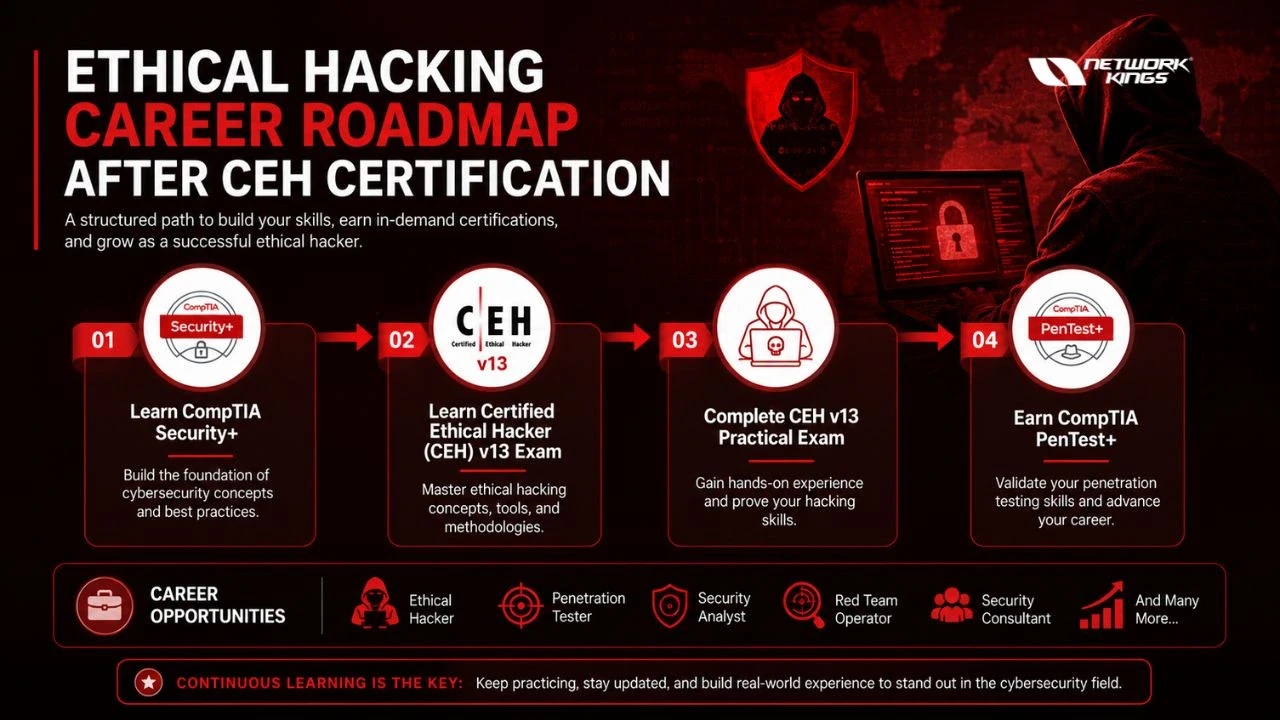

Ethical Hacking Career Roadmap After CEH Certification
The cybersecurity landscape is evolving faster than ever. With data breaches making headlines almost weekly and organizations desperately searching for skilled professionals to protect their digital assets, the demand for ethical hackers has never been higher. If you've recently earned your Certified Ethical Hacker (CEH) credential or are considering it, you're standing at the threshold of an incredibly rewarding career path. But here's the thing, getting certified is just the beginning; what you do next matters tremendously.
Let me walk you through a practical roadmap to leverage your CEH certification and build a thriving ethical hacking career, with opportunities for growth, specialization, and substantial earning potential.
Why CEH Matters in Today's Cybersecurity Landscape
The CEH certification has become the industry standard for aspiring security professionals for a reason. It's recognized globally by organizations like Microsoft, Google, and countless Fortune 500 companies. When you add CEH to your resume, you're telling employers that you understand the hacker's mindset, know how to identify vulnerabilities, and most importantly, know how to help them defend against attacks.
But here's the real value: CEH teaches you to think like an attacker. You learn penetration testing fundamentals, vulnerability assessment methodologies, and how to navigate through networks using tools like Nmap, Metasploit, and Burp Suite. That hands-on knowledge is what sets you apart from other candidates and directly translates to immediate job relevance.
Immediate Career Opportunities After CEH Certification
Right after earning your CEH, you've unlocked access to several entry to mid-level roles that were previously out of reach:
Security Operations Center (SOC) Analyst – You'll monitor networks in real-time, investigate security incidents, and use SIEM tools to detect threats. This is an excellent starting point because it gives you practical experience with actual threats.
Junior Penetration Tester – Companies pay good money for penetration testing services, and with CEH under your belt, you're qualified to start assisting on engagements. You'll help identify security weaknesses before the bad guys do.
Network Security Analyst – Organizations need people who understand how to secure network infrastructure. Your CEH knowledge in network security makes you a perfect fit.
Vulnerability Assessment Specialist – This role focuses on scanning networks, identifying weaknesses, and documenting findings for remediation. It's methodical work that directly prevents breaches.
Ethical Hacking Salaries and Growth Potential
Let's be honest, salary matters. According to current industry data, a junior penetration tester with CEH can expect to earn between $65,000 to $85,000 annually in the US. SOC analysts typically start around $50,000 to $70,000, but here's the exciting part: as you gain experience and certifications, those numbers jump significantly.
Mid-level penetration testers and security consultants are pulling $100,000 to $150,000+. Senior ethical hackers with extensive experience and additional certifications can command $150,000 to $250,000 or more, especially in high-demand areas like application security or specialized pentesting.
Level Up: Advanced Certifications After CEH
CEH is just the foundation. To truly accelerate your career and unlock higher-paying positions, you'll want to stack additional certifications:
OSCP (Offensive Security Certified Professional) – This is the gold standard for penetration testers. It's challenging and hands-on, but employers absolutely respect it. If you want to become a top-tier pentester, OSCP is non-negotiable.
CISSP (Certified Information Systems Security Professional) – Perfect when you're ready to move into management and architecture roles. It's more strategic than technical, covering governance, compliance, and organizational security.
CompTIA Security+ – An excellent complement to CEH. It bridges the gap between technical skills and security management principles. Many government contracts actually require Security+ as a baseline.
PNPT (Practical Network Penetration Tester) – A newer credential that's gaining serious traction. It's practical, affordable, and often considered more current than older certifications.
GPEN (GIAC Penetration Tester) – Another respected pentesting credential that demonstrates deep offensive security knowledge.
The Practical Skills You'll Actually Need
Certifications open doors, but skills keep you employed. After CEH, focus on mastering these core competencies:
Hands-on lab work with Kali Linux and penetration testing tools
Web application security testing using Burp Suite and OWASP methodologies
Network reconnaissance and enumeration
Scripting in Python or Bash to automate testing tasks
Report writing that explains findings in business terms
Communication skills to present results to non-technical stakeholders
Building Real-World Experience
Here's what separates professionals who stagnate from those who thrive: real-world experience. Don't just rely on certifications alone.
Bug Bounty Platforms like HackerOne, Bugcrowd, and Intigriti are goldmines. You'll test live applications, find actual vulnerabilities, and earn money doing it. Plus, successful bug bounties look fantastic on your resume.
Home Labs – Set up your own lab environment. Practice with vulnerable machines on platforms like HackTheBox and TryHackMe. These platforms gamify learning and keep your skills sharp.
Freelance Pentesting – Consider taking on small penetration testing projects through platforms like Upwork or through local consulting firms looking for contract help.
Capture The Flag (CTF) Competitions – Participate in cybersecurity competitions. They're incredibly fun and keep your problem-solving skills honed.
Smart Career Development Strategy
Your trajectory after CEH should look something like this:
Start with a SOC analyst or junior pentester role (6-12 months), gain experience, then move into a mid-level penetration tester position while pursuing OSCP. After a few years, consider specialized roles like cloud security, API security, or IoT security testing. Eventually, you can transition into roles like Security Manager, Architect, or even start your own consulting practice.
The Future of Ethical Hacking Careers
The landscape is evolving rapidly. Cloud security, API testing, and supply chain security are emerging as hot specialties. Zero-trust architecture is becoming standard, creating demand for security professionals who understand modern infrastructure. DevSecOps roles are exploding companies need people who can integrate security into development pipelines.
The ethical hackers who'll have the most opportunity in the next five years are those who stay curious, keep learning new tools and methodologies, and adapt as threats evolve.
You've earned your CEH. Congratulations. But this is where the real work begins. Land that first security role, build your portfolio through bug bounties and lab work, and commit to continuous learning. The cybersecurity industry desperately needs talented ethical hackers, and the market rewards those who invest in themselves.
Your career in ethical hacking isn't just promising, it's incredibly exciting. The skills you're building protect real people and organizations. Get out there and start building something remarkable.

The founder of Network Kings, is a renowned Network Engineer with over 12 years of experience at top IT companies like TCS, Aricent, Apple, and Juniper Networks. Starting his journey through a YouTube channel in 2013, he has inspired thousands of students worldwide to build successful careers in networking and IT. His passion for teaching and simplifying complex technologies makes him one of the most admired mentors in the industry.