

Diwali Career Utsav: Master programs + IT 360 Bundle free, 24×7 labs and a resume & career sessionExplore master programs
DevOpsMASTER PROGRAM

DevSecOps Master Program

Combine the full DevOps Master Program with the Cybersecurity Red Team track, then bring security into every stage of delivery — 180+ live hours across CI/CD, containers, IaC, ethical hacking and shift-left security.

DevOps toolchainEthical hacking & PenTest+Secure CI/CD
Need help choosing? Request career guidance
Lab running
Your DevOps lab
Git
CI
Docker
Kubernetes
Terraform
Ansible
Monitoring
Registry
LIVE LAB1/5
Launching your DevOps lab…
Diagram: a your devops lab connected to Git, CI, Docker, Kubernetes, Terraform, Ansible, Monitoring, Registry.

What is inside the DevSecOps Master Program?

DevSecOps Master Program is a live, instructor-led program with 180+ live hours. It covers 18 modules and 20 guided labs. Try DevOps & Cyber Labs free before you enroll.

Live training
180+ live hours
Curriculum
DevOps + Red Team + DevSecOps
Guided labs
20 labs
Batch length
5–6 months on weekdays, 6–7 on weekends
Practice lab
DevOps & Cyber Labs, free trial before you enroll

Finish DevSecOps Master Program. Earn a certificate students can verify.

We also provide certification after you complete the course. Pass a proctored Network Kings assessment and receive a certificate with a unique credential ID and a public verification record. Students can check it in seconds, and no login is needed.

  • Issued by Network Kings. The record comes from our system and can’t be edited by the holder.
  • Live status. If a certificate is ever revoked, its record says so immediately.
  • Score on record. The assessment score is shown, so the result speaks for itself.
NETWORK KINGS - Official Digital Credential
Sample credential
Priya Menon
DevSecOps Master Program Certification Assessment
Credential ID
Issued
NK-CERT-2026-104729
14 Aug 2026
Sample credential. Real credentials link to a live verification record.

How to get certified

Prepare, take your assessment, and share your achievement.

  1. Open the exam from your course

    Select Get Certification on your course in the Network Kings learning app.

  2. Take the proctored assessment

    Answer the timed questions in one sitting with your camera on and the exam in fullscreen.

  3. Pass with 70% or more

    The certification team reviews your result and emails your certificate within 24 hours.

  4. Share it anywhere

    Add it to LinkedIn or your CV. Anyone can confirm it with the ID or QR code.

YOUR PROGRAM ROADMAPDUAL TRACK

DevSecOps Roadmap

Become a DevSecOps Engineer combining DevOps automation with offensive security skills. DevSecOps follows 16 stages: Linux, Shell Scripting, Git, CI/CD Pipelines and more.

₹6 LPA → ₹50+ LPA
WHO CAN LEARN THIS
  • DevOps Engineer
  • Network Engineer
  • IT Engineer
  • Automation & IaC
  • Containerization
  • Vulnerability Assessment
  • Security Testing in CI/CD
  1. LinuxIn program1/16
  2. Shell ScriptingNext step2/16
  3. GitIn program3/16
  4. CI/CD PipelinesIn program4/16
  5. Docker3 labsIn program5/16
  6. KubernetesIn program6/16
  7. Terraformcapstone projectIn program7/16
  8. AnsibleIn program8/16
  9. JenkinsIn program9/16
  10. ZabbixIn program10/16
  11. PrometheusNext step11/16
  12. ELK StackNext step12/16
  13. CompTIA Security+In program13/16
  14. CEH v13In program14/16
  15. CEH v13 PracticalNext step15/16
  16. CompTIA PenTest+In program16/16

Career Roles

4 PATHS
  • DevSecOps Engineer
  • Site Reliability Engineer
  • Security Automation Engineer
  • Cloud Security Engineer

Salary Potential

8X GROWTH
DevOps / Security Engineer
₹6–10 LPA
DevSecOps Engineer
₹15–25 LPA
DevSecOps Lead
₹30–50 LPA
IN THIS PROGRAM
  • 180+ live hours
  • 20 lab exercises
  • 3 capstone projects
  • DevOps + Red Team + DevSecOps
  • Recording of every class
  • 24×7 DevOps & Cyber Labs

Salary ranges are indicative and vary by city, skills and employer; they are not a guarantee. Stages marked “Next step” continue your career path beyond this program.

Concept illustration of security checks integrated into a software delivery pipeline.
CONNECT THE CONCEPTS

Explore the systems behind DevSecOps.

The roadmap above shows how the subjects connect. Explore the curriculum below for every topic, lab and project.

EXPERIENCE THE ROLE

See what a DevOps Engineer really does, minute by minute.

Watch a real-world incident unfold on the engineer’s screens and in a 3D model of the systems they look after. Then type the commands yourself and try the same task in a lab.

LIVE SHIFT

A release is stuck: the pipeline is red

CI pipeline · main
  1. Build
  2. Test
  3. Push image
  4. Deploy
Run #482 · triggered by a merge to main
✗ Test stage failed after 1m 12s
incident-room
  1. Developer

    My release is blocked, the pipeline is red. Can you take a look?

The systems you look after
09:20 · STEP 1 OF 5

The pipeline fails

A developer pushed a new feature, but the automated pipeline failed at the test stage. Nothing can be released until it is green.

You learn this in the program: CI/CD · GitHub Actions / Jenkins

Illustrative shift based on common real-world incidents. Names, times and numbers are examples.

YOUR TURN

Type the commands yourself, and get an honest answer about AI.

prod-clusterYour turn: type a command
kubectl get pods -n payments
api-7c9d 0/1 CrashLoopBackOff 6
# Crashing on a loop. Read the logs.
# Your turn. Type a command, or tap one below. Start with: help
Not sure what to type? Tap one:
AI REALITY CHECK · DEVOPS ENGINEER

AI writes boilerplate; reliability stays human

AI is already good at

  • Writes pipeline, Dockerfile and Terraform boilerplate
  • Explains errors and suggests fixes
  • Generates tests and documentation

You stay essential for

  • Keeps production reliable and recovers when it fails
  • Designs platforms, cost and security guardrails
  • Reviews AI-written code and configuration before it ships
  • Owns on-call and the postmortem

Skill to add: Go deep on Kubernetes, observability and Terraform, and learn to review AI-generated infrastructure code.

  • GitHub Actions
  • Jenkins
  • Docker
  • Kubernetes
  • Terraform
  • Grafana

Our assessment, not a guarantee. No job is fully AI-proof: people who use AI well replace people who do not.

3-MINUTE CHALLENGE

A deploy just broke production. Make five calls like the on-call engineer.

Score yourself, get a badge, and see why each answer is right or wrong.

Start the challenge
DO THIS TASK YOURSELF

Open the DevOps & Cyber Labs trial and work through the same kind of task.

Real systems, guided steps. The lab site opens only when you click.

Open the DevOps & Cyber Labs trial
READY WHEN YOU ARE

Batch dates for this program are announced on the upcoming events page.

Review the fee and your enrollment offer before you pay.

YOUR PROGRAM AT A GLANCE

Build the pipeline. Break it. Secure it.

Combine the full DevOps Master Program with the Cybersecurity Red Team track, then bring security into every stage of delivery — 180+ live hours across CI/CD, containers, IaC, ethical hacking and shift-left security.

Live training
180+ live hours
Curriculum
DevOps + Red Team + DevSecOps
Learning approach
Classes + practical work

Included in your learning experience

  • 180+ hours of LIVE instructor-led training — DevOps 80+ & Red Team 100+
  • Learn from DevOps practitioners and certified ethical hackers
  • DevOps & Cyber Labs (labs.nwkings.com) with real pipelines and vulnerable targets
  • Secure CI/CD capstone project
  • Interview preparation & mock interviews
  • 1 year access to class recordings
  • Dedicated community support
FIND YOUR STARTING POINT

Is this program for you?

  • DevOps engineer adding security
  • Developer or system admin moving into DevSecOps
  • Security engineer who wants automation skills
  • Network engineer who wants DevOps and security together
  • Want both the DevOps and Red Team programs in one plan

Discuss your current skills with an advisor to choose the right starting point and batch.

Still choosing? Find your learning path
EXPLORE THE FULL SYLLABUS

From foundations to applied skills.

Follow the complete curriculum, including the topics, lab exercises and project work in each section.

Phase 01

Phase 01 — DevOps Engineering

01

Introduction to DevOps

Foundation

Concepts, Culture & Enterprise Infrastructure

Learning topics
  • Understanding DevOps
  • Roles & responsibilities of DevOps
  • DevOps problems & solutions
  • Identifying cultural impediments
  • Infrastructure layouts & challenges
  • Enterprise-scale network concepts

02

Version Control System — Git

Git / VCS

Local & Remote Workflows · Branching · Conflict Resolution

Learning topics
  • Introduction to VCS & types
  • How Git works internally
  • Working locally with Git
  • Working remotely with Git
  • GitHub branching & merging
  • Resolve merge conflicts
  • Reset & stash operations
  • Set up Git on-premises hardware
03

Jenkins — CI/CD

CI/CD

Build · Test · Deploy Automation Pipelines

Learning topics
  • Introduction to Jenkins
  • Installing & setting up Jenkins
  • Maven project setup & integration
  • Project test & auto-deployment
  • Build pipeline view & scripts
  • Remote Jenkins node / slave setup
  • Jenkins behind Apache proxy
  • Reports & email notifications
04

Docker

Containers

Containerisation · Images · Networking · Compose

Learning topics
  • Docker introduction & installation
  • Major Docker components
  • Manage images & container commands
  • Build images from Dockerfile
  • Docker volumes
  • Backup & restore Docker images
  • Docker networking
  • Multi-container apps with Docker Compose
  • Configure private registry server
Hands-on Labs
  • Build & push images
  • Docker Compose stack
  • Private registry setup
05

Kubernetes

Orchestration

Container Orchestration · Deployments · Scaling

Learning topics
  • Introduction to Kubernetes
  • Kubernetes clusters & architecture
  • Cluster installation & exploration
  • Understanding YAML
  • Deployments using YAML
  • Creating Services in Kubernetes
  • Pod, Replication & Deployment config
  • Rolling updates · Volume management
  • Pod scheduling
06

Ansible

Automation

Configuration Management · Playbooks · AWS Integration

Learning topics
  • Introduction to Ansible
  • Ansible architecture, modules & inventory
  • Ad-hoc task management
  • Playbook variables & facts
  • Conditions, loops, notify & handlers
  • Template files management
  • Roles structure & Ansible Galaxy
  • Vault encryption for security
  • Ansible integration with AWS Cloud
  • Dynamic inventory & Ansible Tower
07

Monitoring with Zabbix

Monitoring

Infrastructure Monitoring · Alerting · Linux Setup

Learning topics
  • Zabbix overview & architecture
  • Install & setup Zabbix on Linux
  • Linux fundamentals for monitoring
  • Setup monitoring dashboards
  • Enable email alerts
08

Terraform — Infrastructure as Code

IaC

AWS · Azure · GCP · S3 · Jenkins Integration

Learning topics
  • Introduction to Terraform
  • Getting started & Terraform modules
  • Writing organised Terraform code
  • Terraform with AWS Cloud
  • Terraform with AWS — advanced practice
  • Terraform with Azure & GCP
  • Integration with S3, Git & Jenkins
  • Terraform troubleshooting & testing
  • Advanced features & real-world examples
APPLY WHAT YOU LEARN
End-to-End DevOps Pipeline on Cloud
  • Provision cloud infra with Terraform, deploy app via Jenkins CI/CD into Kubernetes
  • Automate configuration with Ansible, monitor with Zabbix alerting
Phase 02

Phase 02 — Offensive Security (Red Team)

09

Domain 1 & 2 — General Concepts, Threats & Vulnerabilities

10+ hrs
General Security Concepts
  • Security controls (technical, managerial, physical)
  • CIA triad & non-repudiation
  • AAA (Authentication, Authorization, Accounting)
  • Zero Trust architecture
  • Physical security & deception tech (honeypots)
  • Change management & cryptographic solutions
Threats, Vulnerabilities & Mitigations
  • Threat actors & motivations
  • Attack surfaces & vectors
  • Malware types & indicators
  • Application & network vulnerabilities
  • Mitigation techniques
  • Vulnerability scanning & management
10

Domain 3 & 4 — Security Architecture & Operations

14+ hrs
Security Architecture
  • Cloud, hybrid & on-premises architecture
  • Network segmentation & infrastructure security
  • Data protection & classification
  • Resilience & recovery strategies
Security Operations
  • Secure baselines & hardening targets
  • Identity & access management
  • Automation & orchestration for security
  • Incident response & digital forensics
  • Data sources for investigations (logs, SIEM)
  • Alerting, monitoring & firewall/IDS tuning
11

Domain 5 — Security Program Management & Oversight

6+ hrs
Learning topics
  • Security governance & policies
  • Risk management process (SLE, ALE, ARO)
  • Third-party risk assessment
  • Compliance & regulatory requirements
  • Audits & assessments
  • Security awareness & training
Included Labs
  • Firewall & IDS/IPS labs
  • Cryptography labs
  • Incident response labs
  • SIEM & log analysis labs
  • Access control labs
  • Risk assessment labs
12

Modules 01–07 — Reconnaissance & Vulnerability Analysis

14+ hrs

Foundations of the attack lifecycle

Learning topics
  • 01 · Introduction to Ethical Hacking
  • 02 · Footprinting & Reconnaissance
  • 03 · Scanning Networks
  • 04 · Enumeration (BGP, NFS)
  • 05 · Vulnerability Analysis
  • 06 · System Hacking & Steganography
  • 07 · Malware Threats (Trojans, APT, fileless)
13

Modules 08–14 — Network & Web Attacks

14+ hrs

Sniffing, evasion & web exploitation

Learning topics
  • 08 · Sniffing
  • 09 · Social Engineering
  • 10 · Denial-of-Service (DoS/DDoS)
  • 11 · Session Hijacking
  • 12 · Evading IDS, Firewalls & Honeypots
  • 13 · Hacking Web Servers
  • 14 · Hacking Web Applications
14

Modules 15–20 — Advanced & Emerging Attack Surfaces

12+ hrs

SQLi, wireless, mobile, IoT, cloud & cryptography

Learning topics
  • 15 · SQL Injection
  • 16 · Hacking Wireless Networks
  • 17 · Hacking Mobile Platforms
  • 18 · IoT & OT Hacking
  • 19 · Cloud Computing Attacks
  • 20 · Cryptography & PKI
Practical Exam Prep
  • Knowledge exam — 125 MCQs, 4 hrs
  • Practical exam — 20 challenges, 6 hrs (Cyber Range)
15

Engagement Management & Reconnaissance

10+ hrs
Engagement Management
  • Scope definition & rules of engagement
  • Legal & ethical considerations
  • Stakeholder communication & escalation
Reconnaissance & Enumeration
  • Passive & active reconnaissance
  • OSINT techniques & tools
  • Enumeration methodologies
16

Vulnerability Discovery & Attacks/Exploits

16+ hrs
Vulnerability Discovery & Analysis
  • Vulnerability scanning & validation
  • Analyzing scan results
Attacks & Exploits
  • Network-based attacks
  • Wireless attacks (evil twin, deauth, WPS)
  • Social engineering attacks & tools
  • Cloud-based attacks (IAM, storage, containers)
  • Scripting for attack automation (Python, PowerShell)
  • Specialized system attacks (mobile, AI, OT/IoT)
17

Post-exploitation, Lateral Movement & Reporting

4+ hrs
Learning topics
  • Establishing & maintaining persistence
  • Lateral movement techniques
  • Privilege escalation & command and control
  • Professional report writing & deliverables
Included Labs
  • Metasploit labs
  • Burp Suite labs
  • Nmap & recon labs
  • Wireless attack labs
  • Cloud exploitation labs
  • Report writing workshop
APPLY WHAT YOU LEARN
Run a Full Penetration Test Engagement
  • Scope, recon & exploit a target environment
  • Deliver a professional penetration test report
Phase 03

Phase 03 — DevSecOps Integration

18

DevSecOps — Shift-Left Security in the Pipeline

Integration

Put security checks into every stage of delivery

Secure CI/CD
  • Threat modelling the pipeline
  • Static code analysis (SAST) in Jenkins
  • Dependency & open-source scanning
  • Dynamic testing (DAST) on staging
Container & Kubernetes Security
  • Image scanning & hardened base images
  • Kubernetes RBAC & network policies
  • Pod security & admission control
Infrastructure & Secrets
  • Scanning Terraform & Ansible for misconfiguration
  • Secrets management
  • Policy as code
Monitor & Respond
  • Real-time security alerts
  • Logging & monitoring for incidents
  • Feedback from findings into the backlog
Included Labs
  • Secure pipeline labs
  • Container scanning labs
  • IaC security labs
APPLY WHAT YOU LEARN
Build a Secure End-to-End CI/CD Pipeline
  • Add SAST, dependency and image scanning gates
  • Deploy to Kubernetes with RBAC and network policies
  • Attack the running app and fix findings through the pipeline
LEARNING THAT YOU CAN APPLY

Turn the syllabus into practical work.

Work through the exercises with your instructor, test configurations and explain the decisions behind your solution.

Skills you’ll work toward

  • Build CI/CD pipelines with Git, Jenkins, Docker, Kubernetes, Ansible and Terraform
  • Test applications and infrastructure like an attacker
  • Add automated security gates to every pipeline stage
  • Secure containers, Kubernetes and infrastructure as code
PLAN THE NEXT STEP

Build on your program.

Explore the supporting bundles and career services available with this program. Your selected enrollment offer sets the final inclusions.

IT 360 Self-Paced Bundle · 10 coursesOptional bundle

Security analysts and engineers defend networks, servers and clouds — the bundle gives you that infrastructure base (CCNA, MCSA Active Directory, Linux, AWS and Azure) as self-paced video alongside your live classes.

  • RHCSA Red Hat Linux
  • AWS Solutions Architect
  • Azure AZ-104 Administrator
  • Cisco CCNA
  • Microsoft MCSA
  • VMware VCP
  • Office 365
  • SCCM
  • Microsoft Intune
  • CompTIA Security+

How the learning areas connect

Explore the learning areas in this path. Check the curriculum above for the subjects included in your program.

  1. Phase 1Git · Jenkins · Docker · Kubernetes · Ansible · Terraform
  2. Phase 2Security+ · CEH v13 · PenTest+
  3. Phase 3Secure CI/CD · Container security · IaC security

Career directions to explore

Roles depend on your experience, practical skills and the opportunities you pursue.

  • DevSecOpsDevOps Engineer → DevSecOps Engineer → Senior DevSecOps → DevSecOps Lead
  • SecuritySecurity Analyst → Application Security Eng. → Security Automation Eng. → Cloud Security Architect
  • DevSecOps EngineerBuild and secure automated delivery pipelines.
  • Security Automation EngineerAutomate security testing and response.
BEFORE YOU GET STARTED

Your questions, answered.

What is DevSecOps?

DevSecOps adds security to every stage of software delivery — code, build, test, deploy and run — so vulnerabilities are found and fixed early instead of after release.

What does this program include?

The complete DevOps Master Program (Git, Jenkins, Docker, Kubernetes, Ansible, Zabbix, Terraform), the Cybersecurity Red Team track (Security+, CEH v13, PenTest+) and a DevSecOps integration module — 180+ live hours.

Do I need coding or security experience?

No. Basic Linux and networking knowledge helps. DevOps starts from fundamentals and security starts with Security+.

Which certifications does it prepare me for?

CompTIA Security+ (SY0-701), CEH v13 and CompTIA PenTest+ (PT0-003), alongside practical DevOps tool skills. Training follows the official exam blueprints. Exam vouchers are included only when your enrollment offer says so — check the inclusions at checkout and the vendor's current exam requirements before booking.

Will I get hands-on labs?

Yes — DevOps & Cyber Labs (labs.nwkings.com) for pipelines, containers and vulnerable targets, plus a secure CI/CD capstone.

How do I enroll?

Request a callback on this page. A course advisor confirms your starting point, the next live batch, the fee and EMI options, then shares a secure payment link on nwkings.com.

Connect the concepts.
Put them to work.

Move from understanding a system to configuring, testing and improving it through guided practice.

  • Configure a network

    Trace connections and practice working with devices and services.

  • Test what changes

    Explore lab scenarios and inspect how configuration choices affect a system.

  • Build repeatable workflows

    Explore Linux, scripting and automation in the relevant learning paths.

Explore the lab environments

Confirm the available labs and access period for your chosen course.

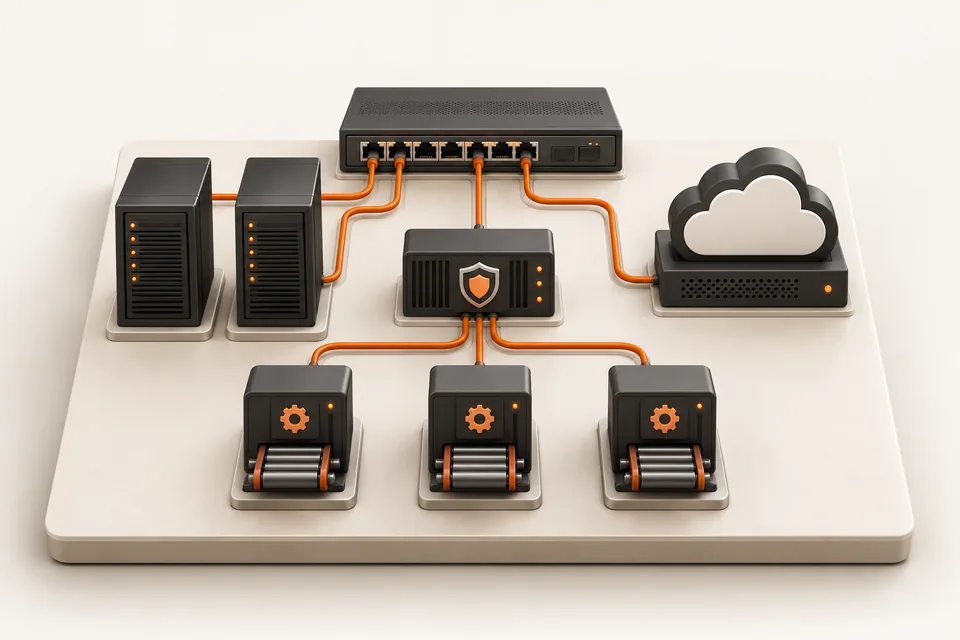
Illustration of a miniature switch, servers, cloud, security gateway and delivery modules connected in an infrastructure learning lab.
A connected view of networking, cloud, security and automation.

Learn from top 1% engineers.

Meet instructors who bring networking, cloud and automation experience into the classroom.

Atul Sharma
Founder · Networking

Atul Sharma

12+ years in networking

Networking experience spanning Aricent, TCS, Apple and Juniper.

Sanjay Sharma
AWS cloud

Sanjay Sharma

20+ years of experience

Cloud mentor bringing extensive hands-on AWS experience to the classroom.

Amit Bhatt
Linux & DevOps

Amit Bhatt

11+ years of experience

DevOps automation experience at CDAC, IBM and Integrated Solutions.

Industry experience. Practical explanations. A human connection.

Explore Network Kings
Aadil Hameed dar

Aadil Hameed dar

Network Engineer L1

“Industry-expert trainers made networking easy to understand.”

Shared with Network Kings

Explore, talk it through, or enroll.

See the syllabus and fees at your own pace. Request personal guidance when you need help choosing.

Find the right direction.

Discuss your experience, interests and the skills you want to build with our team.

Request career guidance

Have a course question?

Ask about prerequisites, live classes, lab access or the enrollment options for your course.

Request a callback

Ready for your next skill?

Compare our learning formats, then open your chosen course to review enrollment options.

Explore learning plans

Use the enquiry form to share your course interest, or WhatsApp/email to include a callback or guidance request.

Why learn from the top 1% of engineers?

Because passing an exam and doing the job are different skills, and only experience closes the gap. Network Kings mentors have spent 11 to 20+ years building and running networks, cloud platforms and pipelines at companies like Apple, Juniper Networks, IBM and CDAC. They teach what breaks in production, why, and how engineers fix it under pressure.

  • Amit Bhatt, Linux & DevOps
  • Atul Sharma, Founder & CEO
  • Sanjay Sharma, AWS
  • Vikas Kumar, Azure
  • Ajay, Azure
  • Lazaro (Laz) Diaz, Networking

Amit Bhatt (Linux & DevOps, 11+ yrs), Atul Sharma (Founder & CEO, 12+ yrs), Sanjay Sharma (AWS, 20+ yrs) and more. Meet the mentors

Same problem, two answers. Pick a track:

On the job: The release pipeline fails at 2 AM, and production is half-deployed.

The textbook answer

CI/CD automates build, test and deployment. If the pipeline fails, check the logs to find the error.

Correct. Not enough to fix it.

How a production engineer teaches it

  1. Roll back first, debug second. Users come before root cause.
  2. Diff the lockfile and pin the dependency that changed overnight.
  3. Reproduce it in a throwaway container and add the test that would have caught it.
  4. Write a five-line postmortem the team will actually read.
  • The why behind every command, not just the syntax.
  • Hands-on labs for every topic, so the first fault you fix is not at work.
  • Doubts answered by someone who has fixed it in a live network, cloud or pipeline.