
Diwali Career Utsav: Master programs + IT 360 Bundle free, 24×7 labs and a resume & career sessionExplore master programs
Cybersecurity

CCIE Security Course - Cisco Certified Internetwork Expert

CCIE Security training certification deals with the study of complex Security Solutions and further helps in understanding, designing, read more.

Perimeter Security and Intrusion PreventionSecure Connectivity and SegmentationInfrastructure Security
Need help choosing? Request career guidance
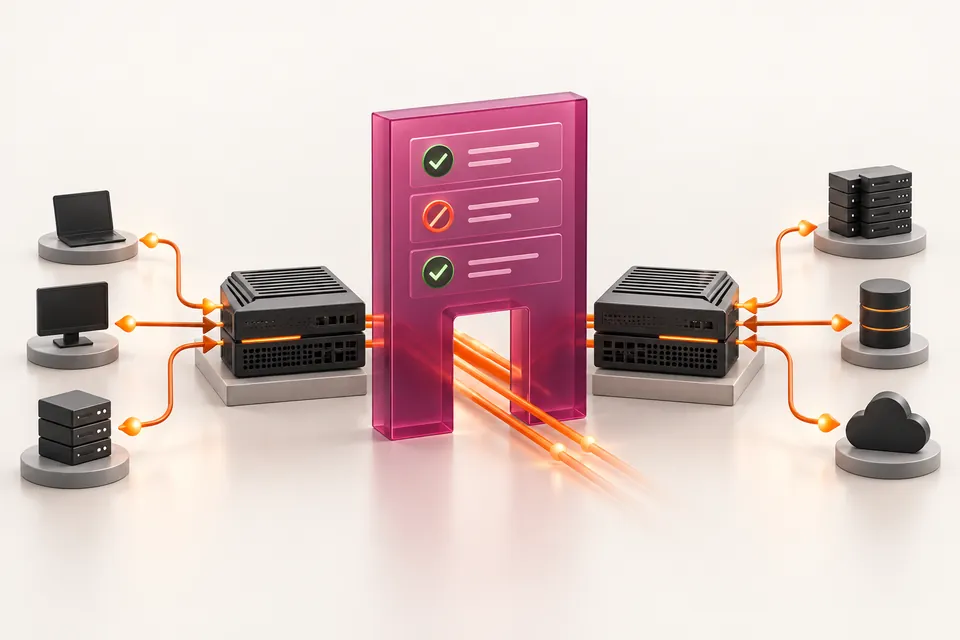
Concept illustration of layered firewall gateways inspecting and separating network traffic.
CCIE Security Course - Cisco Certified Internetwork Expert — conceptual illustration

Finish CCIE Security Course - Cisco Certified Internetwork Expert. Earn a certificate students can verify.

We also provide certification after you complete the course. Pass a proctored Network Kings assessment and receive a certificate with a unique credential ID and a public verification record. Students can check it in seconds, and no login is needed.

  • Issued by Network Kings. The record comes from our system and can’t be edited by the holder.
  • Live status. If a certificate is ever revoked, its record says so immediately.
  • Score on record. The assessment score is shown, so the result speaks for itself.
NETWORK KINGS - Official Digital Credential
Sample credential
Priya Menon
CCIE Security Course - Cisco Certified Internetwork Expert Certification Assessment
Credential ID
Issued
NK-CERT-2026-104729
14 Aug 2026
Sample credential. Real credentials link to a live verification record.

How to get certified

Prepare, take your assessment, and share your achievement.

  1. Open the exam from your course

    Select Get Certification on your course in the Network Kings learning app.

  2. Take the proctored assessment

    Answer the timed questions in one sitting with your camera on and the exam in fullscreen.

  3. Pass with 70% or more

    The certification team reviews your result and emails your certificate within 24 hours.

  4. Share it anywhere

    Add it to LinkedIn or your CV. Anyone can confirm it with the ID or QR code.

THE COURSE AT A GLANCE

About this course.

The Cisco Certified Internetwork Expert or CCIE course Certification is meant for Senior Engineers and falls under the category of expert certifications offered by Cisco. CCIE training or CCIE Security training certification deals with the study of complex Security Solutions and further helps in understanding, designing, deploying, and managing the Network Systems in order to keep them secure.

Skills you’ll develop.

  • CCIE Security Exam Curriculum
  • Perimeter Security & Intrusion Prevention
  • Secure Connectivity & Segmentation
  • Infrastructure Security
  • Identity Management & Access Control
  • Advanced Threat Protection
  • About CCIE Security Certification
  • Importance of CCIE Security in IT
  • Scope of CCIE Security Certification
  • How to Earn CCIE Security Certification
  • Value of Online CCIE Security Training
  • Where to Learn CCIE Security Online
  • Benefits of Training with Network Kings
  • Skills Gained from CCIE Security Training
EXPLORE THE SYLLABUS

Built around the skills you need.

Explore each area of the curriculum and the topics covered.

Perimeter Security and Intrusion Prevention
  1. Deployment modes on Cisco ASA and Cisco FTD
  2. Firewall features on Cisco ASA and Cisco FTD
  3. Security features on Cisco IOS/IOS-XE
  4. Cisco Firepower Management Center (FMC) features
  5. NGIPS deployment modes
  6. Next-Generation Firewall (NGFW) features
  7. Detect, and mitigate common types of attacks
  8. Clustering/HA features on Cisco ASA and Cisco FTD
  9. Policies and rules for traffic control on Cisco ASA and Cisco FTD
  10. Routing protocols security on Cisco IOS, Cisco ASA, and Cisco FTD
  11. Network connectivity through Cisco ASA and Cisco FTD
  12. Correlation and remediation rules on Cisco FMC
Secure Connectivity and Segmentation
  1. AnyConnect client-based remote access VPN technologies on Cisco ASA, Cisco FTD, and Cisco Routers.
  2. Cisco IOS CA for VPN authentication
  3. FlexVPN, DMVPN, and IPsec L2L Tunnels
  4. Uplink and downlink MACsec (802.1AE)
  5. VPN high availability using
  6. Infrastructure segmentation methods
  7. Micro-segmentation with Cisco TrustSec using SGT and SXP
Infrastructure Security
  1. Device hardening techniques and control plane protection methods
  2. Management plane protection techniques
  3. Data plane protection techniques
  4. Layer 2 security techniques
  5. Wireless security technologies
  6. Monitoring protocols
  7. Security features to comply with organizational security policies, procedures, and standards BCP 38
  8. Cisco SAFE model to validate network security design and to identify threats to different Places in the Network (PINs)
  9. Interaction with network devices through APIs using basic Python scripts
  10. Cisco DNAC Northbound APIs use cases
Identity Management, Information Exchange, and Access Control
  1. ISE scalability using multiple nodes and personas
  2. Cisco switches and Cisco Wireless LAN Controllers for network access AAA with ISE
  3. Cisco devices for administrative access with ISE
  4. AAA for network access with 802.1X and MAB using ISE
  5. Guest lifecycle management using ISE and Cisco Wireless LAN controllers
  6. BYOD on-boarding and network access flows
  7. ISE integration with external identity sources
  8. Provisioning of AnyConnect with ISE and ASA
  9. Posture assessment with ISE
  10. Endpoint profiling using ISE and Cisco network infrastructure including device sensor
  11. Integration of MDM with ISE
  12. Certificate-based authentication using ISE
  13. Authentication methods
  14. Identity mapping on ASA, ISE, WSA, and FTD
  15. pxGrid integration between security devices WSA, ISE, and Cisco FMC
  16. Integration of ISE with multi-factor authentication
  17. Access control and single sign-on using Cisco DUO security technology
Advanced Threat Protection and Content Security
  1. AMP for networks, AMP for endpoints, and AMP for content security (ESA, and WSA)
  2. Detect, analyze, and mitigate malware incidents
  3. Perform packet capture and analysis using Wireshark, tcpdump, SPAN, ERSPAN, and RSPAN
  4. DNS layer security, intelligent proxy, and user identification using Cisco Umbrella
  5. Web filtering, user identification, and Application Visibility and Control (AVC) on Cisco FTD and WSA
  6. WCCP redirection on Cisco devices
  7. Email security features
  8. HTTPS decryption and inspection on Cisco FTD, WSA and Umbrella
  9. SMA for centralized content security management
  10. Cisco advanced threat solutions and their integration: Stealth watch, FMC, AMP, Cognitive Threat Analytics (CTA), Threat Grid, Encrypted Traffic Analytics (ETA), WSA, SMA, CTR, and Umbrella
GO DEEPER

More about this course.

Everything You Need to Know About the CCIE Security Certification

Are you looking forward to getting the best CCIE Security training from networking experts? You have landed the best platform to excel in IT.

What is the CCIE Security program?

The (Cisco Certified Internetwork Expert) CCIE Security course is a highly advanced technical certification program designed to prepare professionals for the possible network security challenges they can face in an enterprise. The candidates get expert training to operate, design, implement, and maintain the security infrastructure of complex enterprise networks.

Why is CCIE Security certification required in IT?

The CCIE Security training focuses on the latest security technologies and best industry practices requiring a deep understanding of networking protocols, security systems, and advanced security methodologies in IT. The CCIE Security course enables a candidate to master network security skills to upgrade in career and earn huge in the IT networking industry.

How to earn a CCIE Security certification?

To earn the CCIE Security certification, candidates must pass a rigorous written exam and a practical lab exam, which assesses their skills in configuring, troubleshooting, and optimizing security systems. The 8-hour hands-on lab exam covers the end-to-end lifecycle of complex enterprise networks, from designing and deploying to operating and optimizing.

Is online CCIE Security training worth it?

The online CCIE Security course training is 100% worth it because it provides advanced-level networking solutions to the candidates thriving to become Network Engineers. Also, since the demand for network engineers and experts in network security management is increasing, there will be a 10x growth in job vacancies by the next two years.

What are the benefits of taking online CCIE Security training with Network kings?

Network kings is the best platform to pursue an online CCIE Security course, where you can experience the quality of our courses by enrolling for a FREE LIVE class.

  • Your knowledge and skills get enhanced just by sitting at home.
  • You can learn directly on your mobile phone and laptop.
  • Timings are flexible.
  • You can learn from Experienced Trainers and Industry Experts.
What skills does the CCIE Security certification training provide?

The CCIE Security certification training provides a candidate with the following skills-

  • Network security principles and technologies - The network security principles and technologies include understanding how to design, implement, and troubleshoot secure networks using technologies, including firewalls, intrusion prevention systems (IPS), and VPNs.
  • Security protocols and technologies - The security protocols and technologies include knowledge of security protocols such as SSL, TLS, and SSH and technologies like secure boot, bootstrapping, and file transfer.
  • Network infrastructure security - Network infrastructure security includes understanding how to secure network infrastructure devices such as routers, switches, and firewalls and knowledge of network segmentation and access control.
  • Network security management and monitoring - Network security management and monitoring includes understanding how to monitor network security using tools such as Syslog, SNMP, and NetFlow and knowledge of security event management and incident response.
  • Security policies and compliance - The security policies and compliance includes understanding how to develop and enforce security policies and knowledge of compliance requirements such as PCI DSS and HIPAA.
What are the available job roles after completing the CCIE Security course?

The top available job roles after completing the CCIE Security course are as follows-

  • Network Security Engineer
  • Security Consultant
  • Security Analyst
  • Security Architect
  • Cybersecurity Engineer
  • Information Security Manager
  • Network Security Administrator
  • Senior Security Engineer
  • Security Operations Center (SOC) Analyst
  • Security Operations Center (SOC) Manager
  • Penetration Tester
  • Ethical Hacker
  • Network Security Specialist
  • Incident Response Analyst
  • Information Security Auditor
  • Compliance Analyst
  • IT Security Project Manager
  • Cloud Security Architect
  • Endpoint Security Engineer
  • Security Product Manager

Connect the concepts.
Put them to work.

Move from understanding a system to configuring, testing and improving it through guided practice.

  • Configure a network

    Trace connections and practice working with devices and services.

  • Test what changes

    Explore lab scenarios and inspect how configuration choices affect a system.

  • Build repeatable workflows

    Explore Linux, scripting and automation in the relevant learning paths.

Explore the lab environments

Confirm the available labs and access period for your chosen course.
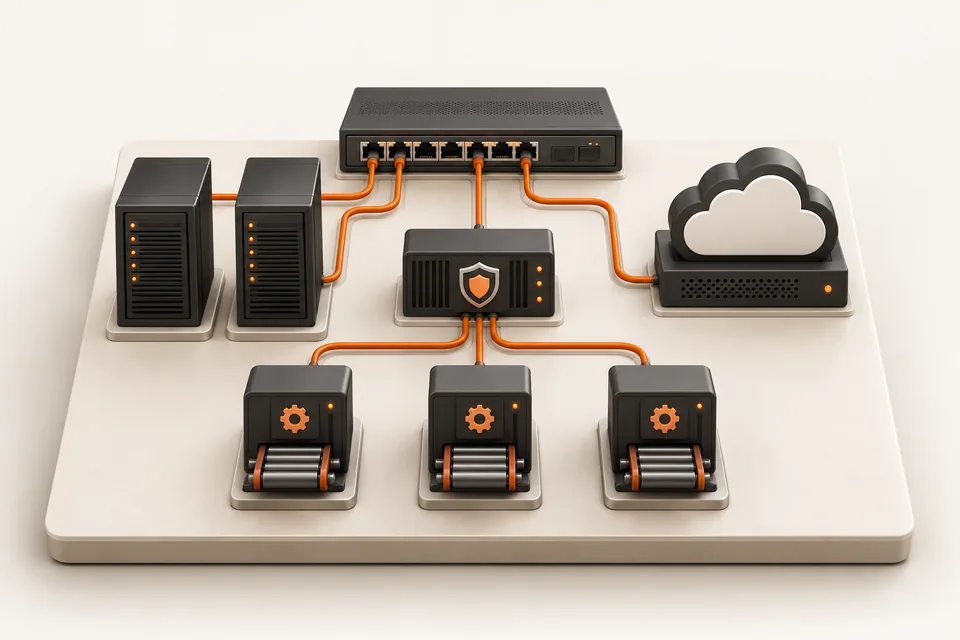
Illustration of a miniature switch, servers, cloud, security gateway and delivery modules connected in an infrastructure learning lab.
A connected view of networking, cloud, security and automation.

Learn from top 1% engineers.

Meet instructors who bring networking, cloud and automation experience into the classroom.

Atul Sharma
Founder · Networking

Atul Sharma

12+ years in networking

Networking experience spanning Aricent, TCS, Apple and Juniper.

Sanjay Sharma
AWS cloud

Sanjay Sharma

20+ years of experience

Cloud mentor bringing extensive hands-on AWS experience to the classroom.

Amit Bhatt
Linux & DevOps

Amit Bhatt

11+ years of experience

DevOps automation experience at CDAC, IBM and Integrated Solutions.

Industry experience. Practical explanations. A human connection.

Explore Network Kings

Aadil Hameed dar

Aadil Hameed dar

Network Engineer L1

“Industry-expert trainers made networking easy to understand.”

Shared with Network Kings

Explore, talk it through, or enroll.

See the syllabus and fees at your own pace. Request personal guidance when you need help choosing.

Find the right direction.

Discuss your experience, interests and the skills you want to build with our team.

Request career guidance

Have a course question?

Ask about prerequisites, live classes, lab access or the enrollment options for your course.

Request a callback

Ready for your next skill?

Compare our learning formats, then open your chosen course to review enrollment options.

Explore learning plans

Use the enquiry form to share your course interest, or WhatsApp/email to include a callback or guidance request.

Why learn from the top 1% of engineers?

Because passing an exam and doing the job are different skills, and only experience closes the gap. Network Kings mentors have spent 11 to 20+ years building and running networks, cloud platforms and pipelines at companies like Apple, Juniper Networks, IBM and CDAC. They teach what breaks in production, why, and how engineers fix it under pressure.

  • Atul Sharma, Founder & CEO mentor at Network KingsAtul Sharma, Founder & CEO
  • Sanjay Sharma, AWS mentor at Network KingsSanjay Sharma, AWS
  • Vikas Kumar, Azure mentor at Network KingsVikas Kumar, Azure
  • Ajay, Azure mentor at Network KingsAjay, Azure
  • Amit Bhatt, Linux & DevOps mentor at Network KingsAmit Bhatt, Linux & DevOps
  • Lazaro (Laz) Diaz, Networking mentor at Network KingsLazaro (Laz) Diaz, Networking

Atul Sharma (Founder & CEO, 12+ yrs), Sanjay Sharma (AWS, 20+ yrs), Vikas Kumar (Azure, 20+ yrs) and more. Meet the mentors

Same problem, two answers. Pick a track:

On the job: The SIEM raises hundreds of alerts before lunch, and one of them is real.

The textbook answer

A SIEM collects logs and generates alerts. Analysts investigate each alert and escalate incidents.

Correct. Not enough to fix it.

How a production engineer teaches it

  1. Triage by asset value and attack stage, not by arrival time.
  2. Join the login, the process tree and the outbound connection into one story.
  3. Contain the host, then hand over a timeline the incident team can act on.
  4. Tune the noisy rule so tomorrow's queue is shorter than today's.
  • The why behind every command, not just the syntax.
  • Hands-on labs for every topic, so the first fault you fix is not at work.
  • Doubts answered by someone who has fixed it in a live network, cloud or pipeline.